
Have you ever wanted stronger, more defined legs without setting foot in a gym? If your schedule feels packed and equipment is limited, that does not mean your lower-body training has to suffer.
Your quadriceps play a major role in walking, running, climbing stairs, and protecting your knees, so giving them focused attention can improve both strength and daily movement.
The good news is that an effective quad workout does not require machines or heavy weights. With the right exercises, proper tempo, and short rest periods, you can challenge your legs in just twenty minutes at home.
This routine combines controlled movements, bodyweight resistance, and smart sequencing to help you build strength, stability, and endurance efficiently.
1. Bodyweight Squats
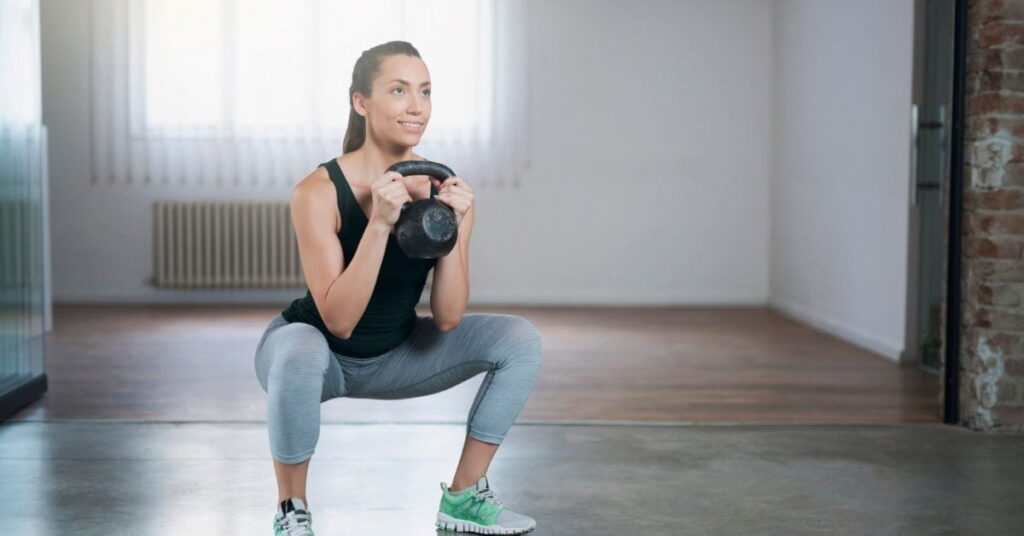
Bodyweight squats are a foundational lower-body exercise that directly targets the quadriceps while also engaging the glutes and core for stability. This movement mimics everyday actions such as sitting and standing, which makes it both practical and highly effective.
When performed with control and proper depth, squats place consistent tension on the front of the thighs. Slowing down the lowering phase increases muscle engagement and makes the movement more challenging without adding equipment, making it ideal for home workouts.
How to Do It?
- Stand with your feet shoulder-width apart and your toes slightly turned outward for natural hip alignment.
- Keep your chest lifted and your back straight while tightening your core muscles before moving.
- Push your hips back as if you are sitting into a chair while bending your knees slowly.
- Lower your body until your thighs are parallel to the floor or as low as comfortable.
- Keep your knees tracking over your toes without collapsing inward.
- Press firmly through your heels to return to standing while maintaining steady control.
How It Helps:
Bodyweight squats strengthen the quadriceps by repeatedly loading the knee joint through a full range of motion. They also improve balance and coordination, which supports safer movement during sports and daily tasks.
Strong quads reduce strain on the knees and contribute to better posture and lower-body endurance over time.
2. Forward Lunges
Forward lunges isolate each leg individually, placing significant emphasis on the quadriceps while also recruiting stabilizing muscles. Because each leg works independently, lunges help correct strength imbalances and improve coordination.
The stepping motion increases muscle activation in the front thigh while challenging your balance. This makes forward lunges a powerful addition to a short, focused quad routine at home.
How to Do It?
- Stand upright with your feet hip-width apart and your hands resting at your sides or on your hips.
- Step forward with your right foot, landing firmly on your heel first.
- Bend both knees until your back knee hovers just above the floor.
- Keep your front knee aligned over your ankle and avoid pushing it too far forward.
- Maintain an upright torso and steady breathing throughout the movement.
- Push through your front heel to step back to the starting position.
- Repeat on the opposite leg and continue alternating sides.
How It Helps:
Forward lunges increase quad strength while also building balance and joint stability. By training one leg at a time, they improve coordination and muscular symmetry. Stronger quadriceps support better knee alignment, which can reduce discomfort during activities such as walking, running, or climbing stairs.
3. Wall Sit
The wall sit is an isometric exercise that keeps constant tension on the quadriceps without requiring movement. By holding a seated position against a wall, your quads must work continuously to support your body weight.
This sustained contraction builds muscular endurance and mental focus. It is simple, requires no equipment, and fits perfectly into a quick home workout.
How to Do It?
- Stand with your back flat against a wall and your feet about two feet away from it.
- Slide your back down the wall slowly while bending your knees.
- Lower yourself until your thighs are parallel to the floor.
- Keep your knees directly above your ankles and avoid letting them collapse inward.
- Press your lower back gently into the wall and tighten your core.
- Hold the position while breathing steadily and keeping your chest upright.
How It Helps:
Wall sits build quad endurance by maintaining prolonged tension in the muscles. This improves stamina in activities that require sustained leg effort, such as hiking or cycling. Stronger endurance in the quadriceps also contributes to improved knee stability and reduced fatigue during longer workouts.
4. Step-Ups
Step-ups mimic stair climbing and strongly activate the quadriceps while improving balance. Using a sturdy chair or low platform at home, this movement forces your front thigh to drive your body upward against gravity. It is functional, effective, and easily adjustable by changing height or speed.
How to Do It?
- Stand facing a sturdy chair, step, or platform.
- Place your right foot fully on the elevated surface.
- Press through your right heel to lift your body upward.
- Bring your left foot up to meet your right foot at the top.
- Step back down carefully, leading with the same leg.
- Maintain an upright torso and a controlled pace throughout.
- Switch legs after completing your repetitions.
How It Helps:
Step-ups strengthen the quadriceps while improving coordination and lower-body control. They simulate everyday activities such as climbing stairs, making them practical and beneficial.
Regular practice increases leg strength, supports joint stability, and contributes to stronger overall lower-body performance.
5. Bulgarian Split Squats
Bulgarian split squats are a powerful single-leg exercise that places intense focus on the quadriceps while also engaging the glutes and stabilizing muscles. By elevating the back foot, you shift more load onto the working leg, which increases muscle activation without needing weights.
This variation deepens the range of motion and challenges balance, making it highly effective for building front-thigh strength at home.
How to Do It?
- Stand about two feet in front of a sturdy chair or couch with your back facing it.
- Extend your right leg behind you and rest the top of your foot on the elevated surface.
- Keep your left foot planted firmly on the floor.
- Lower your body slowly by bending your front knee while keeping your torso upright.
- Drop your back knee toward the floor without letting your front knee move past your toes.
- Press through your front heel to return to the starting position with control.
- Complete all repetitions on one side before switching legs.
How It Helps:
Bulgarian split squats build quad strength while correcting muscle imbalances between legs. The increased range of motion improves joint flexibility and control.
Stronger quadriceps from this movement contribute to better athletic performance, improved balance, and more stability in daily lower-body activities.
6. Jump Squats
Jump squats add a dynamic, explosive element to quad training. This movement combines the strength benefits of a squat with the power demand of a vertical jump.
The rapid extension of the knees forces the quadriceps to contract quickly and forcefully, building both strength and muscular power. It also increases your heart rate, making your 20-minute routine more intense and efficient.
How to Do It?
- Stand with your feet shoulder-width apart and your arms relaxed at your sides.
- Lower into a squat position by bending your knees and pushing your hips back.
- Swing your arms backward as you prepare to jump.
- Explosively push through your heels and jump upward as high as possible.
- Swing your arms forward to generate momentum.
- Land softly on the balls of your feet before lowering your heels to the floor.
- Immediately move into the next squat to maintain rhythm and control.
How It Helps:
Jump squats develop quad strength and explosive power, which can improve speed and agility. The fast contractions increase muscle fiber recruitment and improve overall leg conditioning. They also contribute to better coordination and cardiovascular endurance within a short workout session.
7. Narrow-Stance Squats
Narrow-stance squats shift more emphasis onto the quadriceps by reducing the involvement of the hips. With feet placed closer together, the front thighs take on a greater share of the workload.
This subtle adjustment increases tension in the quads and adds variety to your squat routine without adding equipment.
How to Do It?
- Stand with your feet closer than shoulder-width apart, keeping your toes pointed forward.
- Engage your core and keep your chest upright.
- Push your hips slightly back while bending your knees slowly.
- Lower your body until your thighs approach parallel to the floor.
- Keep your knees aligned with your toes and avoid letting them collapse inward.
- Press through your midfoot and heels to stand back up steadily.
- Maintain controlled breathing throughout each repetition.
How It Helps:
Narrow-stance squats increase quad activation by limiting hip dominance in the movement. This helps build stronger front thighs and improves knee extension strength. Over time, this variation contributes to improved lower-body definition and better overall leg control.
8. Reverse Lunges
Reverse lunges shift the stepping motion backward, which reduces stress on the knees while still effectively targeting the quadriceps.
This variation improves balance and control because the backward step requires stability and coordination. It is an excellent addition for those who want a joint-friendly yet challenging quad exercise at home.
How to Do It?
- Stand tall with your feet hip-width apart and your hands resting on your hips.
- Step your right foot backward, landing on the ball of your foot.
- Lower your body until your left thigh is nearly parallel to the floor.
- Keep your front knee aligned over your ankle.
- Maintain an upright torso and steady breathing.
- Push through your front heel to return to the starting position.
- Alternate legs for the desired number of repetitions.
How It Helps:
Reverse lunges strengthen the quadriceps while placing less forward pressure on the knee joint. They also improve balance and coordination. This movement supports joint stability and helps build evenly developed leg strength when performed consistently.
9. Sissy Squats
Sissy squats are an advanced bodyweight movement that places intense and direct tension on the quadriceps by shifting the knees forward while keeping the torso upright. Unlike traditional squats, this variation minimizes hip involvement and isolates the front thighs more deliberately.
Because of the strong quad emphasis, even a few controlled repetitions can feel demanding. This exercise requires focus and balance, making it a challenging but effective addition to a short home quad workout.
How to Do It?
- Stand upright with your feet hip-width apart and hold onto a wall or sturdy surface for balance if needed.
- Rise slightly onto the balls of your feet while keeping your core tight.
- Lean your upper body backward slowly while bending your knees forward.
- Keep your hips extended and your torso straight as your knees move forward.
- Lower yourself until you feel strong tension in your quadriceps.
- Push through the balls of your feet and straighten your knees to return to standing.
- Move slowly and maintain control throughout each repetition.
How It Helps:
Sissy squats isolate the quadriceps more directly than many other bodyweight movements. This focused tension builds knee extension strength and muscular endurance. Over time, stronger quads from this exercise can improve jumping ability, stair-climbing performance, and overall lower-body control.
10. Static Lunge Hold
The static lunge hold is an isometric variation that keeps your quadriceps under steady tension for an extended period. By pausing at the bottom of a lunge, your front thigh must continuously support your body weight.
This builds muscular endurance and stability without requiring repeated movement. It is simple yet highly demanding, especially when held for longer intervals.
How to Do It?
- Step forward into a lunge position with your right foot planted firmly ahead.
- Lower your body until both knees form approximately 90-degree angles.
- Keep your torso upright and your core engaged.
- Ensure your front knee stays aligned over your ankle.
- Hold the position while breathing steadily and maintaining balance.
- Avoid leaning forward or shifting weight unevenly.
- After holding for the desired time, push back to standing and switch legs.
How It Helps:
The static lunge hold increases quad endurance by maintaining continuous muscle contraction. It also strengthens stabilizing muscles around the knee and hip joints. Improved endurance in the quadriceps helps reduce fatigue during longer workouts and supports better lower-body stability.
11. Heel-Elevated Squats
Heel-elevated squats increase quad activation by slightly lifting the heels, which shifts more emphasis onto the front thighs. You can use a small book or a rolled towel under your heels at home.
This change in angle encourages deeper knee flexion and reduces hip dominance, making the quadriceps work harder throughout the movement.
How to Do It?
- Place your heels on a small elevated surface while keeping the balls of your feet on the floor.
- Stand with your feet about shoulder-width apart.
- Tighten your core and keep your chest upright.
- Bend your knees slowly while lowering your hips straight down.
- Keep your knees tracking forward in line with your toes.
- Lower until your thighs are parallel to the floor or slightly below.
- Press through your midfoot to return to standing with control.
How It Helps:
Heel-elevated squats place greater demand on the quadriceps by increasing knee travel and reducing hip involvement. This results in stronger knee extension and improved quad definition. The movement also supports better mobility and strength through a deeper squat range.
12. Lateral Lunges
Lateral lunges add a side-to-side movement pattern that still challenges the quadriceps while engaging inner and outer thigh muscles.
This variation improves coordination and strengthens the legs in a different plane of motion. Adding lateral movement increases overall lower-body balance and prevents your workout from feeling repetitive.
How to Do It?
- Stand with your feet together and your hands in front of your chest.
- Step your right foot out to the side, taking a wide stance.
- Bend your right knee while pushing your hips back.
- Keep your left leg straight and your chest lifted.
- Lower until your right thigh approaches parallel to the floor.
- Push through your right heel to return to the starting position.
- Repeat on the opposite side and continue alternating.
How It Helps:
Lateral lunges strengthen the quadriceps while improving side-to-side stability and coordination. This movement supports better joint control and balanced muscle development.
Training in multiple directions reduces weakness and contributes to stronger, more functional legs overall.
Conclusion
A strong set of quadriceps does not require expensive equipment or long gym sessions. With these twelve focused exercises, you can challenge your legs effectively in just twenty minutes at home. Stay consistent, move with control, and prioritize proper form to steadily build strength, endurance, and balanced lower-body power.