
Are you looking for ways to achieve a flat, toned stomach while building a strong core? Crunches are one of the most effective exercises to target your abdominal muscles and improve core strength.
By performing different types of crunches, you can work the upper abs, lower abs, and obliques, creating a balanced and sculpted midsection. These exercises can be done at home or in the gym without requiring any expensive equipment, making them accessible to everyone.
When performed with proper form and consistency, crunches not only tone your abs but also enhance stability, posture, and overall core endurance.
This guide will introduce nine types of crunches with step-by-step instructions, benefits, and tips to help you strengthen your core safely, avoid injuries, and achieve a flatter, firmer stomach.
1. Basic Crunch
The basic crunch is a fundamental abdominal exercise that targets the rectus abdominis muscles. It is ideal for beginners and focuses on lifting the upper torso off the floor using core strength rather than the neck or arms.
This classic move strengthens the abs, improves posture, and provides a solid foundation for more advanced core exercises. Regular practice contributes to a toned, defined midsection.
How to Do It?
- Lie flat on your back on a mat with knees bent and feet flat on the floor.
- Place your hands lightly behind your head, avoiding pulling on your neck.
- Engage your core by drawing your belly button toward your spine.
- Lift your upper torso off the floor slowly, focusing on contracting your abdominal muscles.
- Hold briefly at the top, then lower down with control without letting your back arch.
- Breathe steadily throughout, exhaling as you lift and inhaling as you lower.
- Repeat for 12–15 reps per set, ensuring deliberate, controlled movements for maximum effect.
How It Helps
Basic crunches strengthen and tone the upper abdominal muscles while improving core stability and endurance. They also support proper posture by engaging stabilizing muscles in the back and pelvis. Incorporating them into a regular workout helps develop foundational core strength, making it easier to progress to advanced crunch variations.
2. Bicycle Crunch
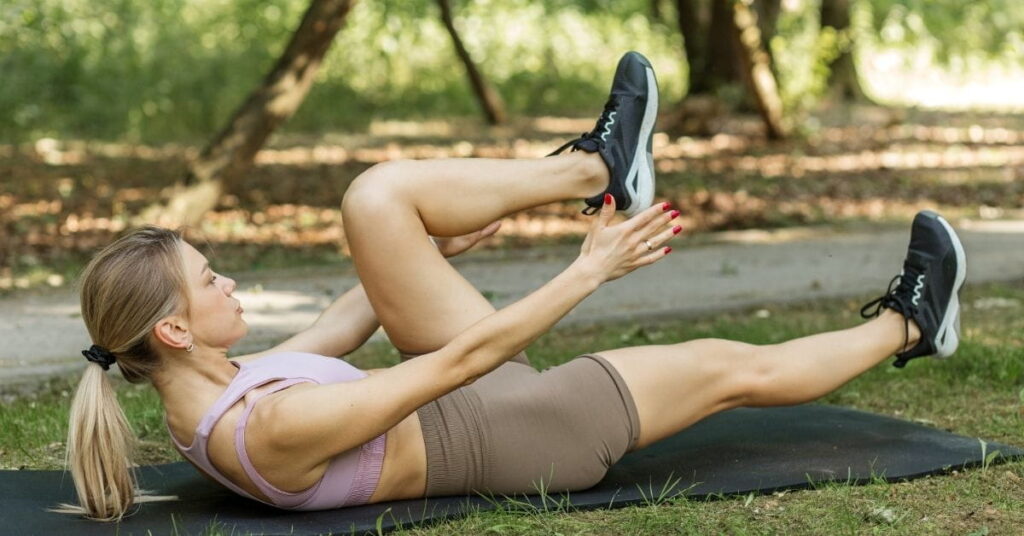
The bicycle crunch is a dynamic core exercise that targets the obliques, upper abs, and lower abs simultaneously. By performing a twisting motion while lifting the legs, it activates multiple abdominal muscles in a controlled manner.
This variation is highly effective for sculpting a well-rounded, toned midsection and improving coordination.
How to Do It?
- Lie flat on your back with your hands lightly placed behind your head and your knees bent.
- Lift your legs off the floor to a tabletop position, keeping them bent at 90 degrees.
- Rotate your torso to bring the right elbow toward the left knee while straightening the right leg.
- Switch sides by bringing the left elbow toward the right knee while extending the left leg.
- Maintain a controlled pace, avoiding jerky movements or pulling on the neck.
- Keep your core engaged throughout and breathe steadily, exhaling with each twist.
- Perform 12–16 alternating reps per side, focusing on slow, deliberate motions for maximum ab activation.
How It Helps
Bicycle crunches engage multiple areas of the core, including the obliques, rectus abdominis, and lower abs, improving overall abdominal strength. They also enhance balance, coordination, and muscular endurance, making your midsection more defined. This exercise is effective for toning and slimming the waistline while supporting functional core stability.
3. Reverse Crunch
The reverse crunch is a lower-abdominal-focused exercise that lifts the hips and legs off the floor, targeting the lower rectus abdominis. Unlike traditional crunches, this move emphasizes the lower abdominal region, helping to tone areas that are often difficult to target. It also engages stabilizing muscles in the hips and pelvis.
How to Do It?
- Lie flat on your back with arms resting by your sides and palms facing down.
- Bend your knees at 90 degrees and lift them toward your chest, keeping your feet together.
- Engage your core and lift your hips slightly off the floor, curling them toward your chest.
- Hold briefly at the top while squeezing your lower abs, then lower your hips and legs with control.
- Avoid using momentum; focus on slow, deliberate movements to maximize engagement.
- Keep your lower back pressed gently into the floor throughout the movement.
- Perform 12–15 reps, maintaining steady breathing and core engagement for effective results.
How It Helps
Reverse crunches strengthen and tone the lower abdominal muscles while improving hip stability and core control. This exercise enhances overall abdominal definition and supports better posture and balance. Regular practice reduces lower belly fat while complementing other core-strengthening exercises for a fully toned midsection.
4. Vertical Leg Crunch
The vertical leg crunch targets the upper and lower abs by keeping the legs raised vertically, which intensifies the engagement of the core muscles.
This variation challenges balance and coordination while strengthening the rectus abdominis. It is excellent for creating a leaner, more defined midsection, and improving overall abdominal endurance.
How to Do It?
- Lie flat on your back with legs extended straight up toward the ceiling, keeping them perpendicular to the floor.
- Place your hands lightly behind your head, ensuring you do not pull on the neck.
- Engage your core by drawing your belly button toward your spine, keeping the lower back pressed gently into the mat.
- Lift your shoulder blades off the floor, reaching your arms toward your toes while contracting your abdominal muscles.
- Pause briefly at the top for maximum contraction, then slowly lower your upper body back down without arching your back.
- Maintain controlled breathing, exhaling as you lift and inhaling as you lower, performing 12–15 reps per set.
How It Helps
Vertical leg crunches intensely engage both the upper and lower abs while stabilizing the pelvis and core. They strengthen the rectus abdominis, improve abdominal endurance, and support better posture. Including this exercise in your routine helps achieve a more sculpted and balanced midsection.
5. Long Arm Crunch
The long arm crunch is a variation that increases the range of motion in the upper body, activating the abs more intensely. By extending the arms overhead, it challenges both the core and shoulder stability, helping build strength and endurance. This move is ideal for those looking to target the full rectus abdominis.
How to Do It?
- Lie on your back with legs bent at 90 degrees or extended straight out for more challenge.
- Extend your arms overhead with hands clasped together, keeping them in line with your ears.
- Engage your core by drawing your belly button toward your spine, ensuring your lower back remains gently pressed into the floor.
- Lift your upper torso off the ground while keeping your arms straight, reaching forward toward your knees or toes.
- Pause at the top while squeezing your abs, then lower slowly with control, avoiding momentum.
- Breathe steadily, exhaling on the lift and inhaling on the descent, performing 10–15 reps per set.
How It Helps
Long arm crunches strengthen the entire rectus abdominis while improving core stability and shoulder engagement. They enhance flexibility in the upper back and improve the range of motion in the shoulders. This variation also promotes better posture and a more defined abdominal appearance.
6. Double Crunch
The double crunch combines the benefits of a basic crunch and reverse crunch, simultaneously working the upper and lower abs.
This compound movement provides a full abdominal workout, improving core strength, coordination, and endurance. It is effective for toning the midsection while engaging stabilizing muscles in the pelvis and lower back.
How to Do It?
- Lie on your back with knees bent at 90 degrees and hands lightly behind your head.
- Lift your legs toward your chest while simultaneously raising your upper torso off the floor.
- Squeeze your core at the top, engaging both upper and lower abs without pulling on your neck.
- Pause briefly, then slowly lower your shoulders and hips back to the starting position with control.
- Keep your lower back pressed gently into the mat and avoid using momentum.
- Perform 12–15 reps per set, maintaining steady breathing and focusing on deliberate contractions.
How It Helps
Double crunches provide a comprehensive abdominal workout, targeting both upper and lower abs effectively. They improve core stability, strength, and endurance while enhancing muscular definition in the midsection. Regular practice promotes a flatter, firmer stomach and supports better posture and functional movement.
7. Oblique Crunch
The oblique crunch targets the side abdominal muscles, known as the obliques, helping to slim and define the waistline. By twisting the torso during the lift, this variation engages the core from multiple angles, improving rotation, stability, and overall abdominal strength. It is excellent for sculpting the sides of the midsection.
How to Do It?
- Lie on your back with knees bent and feet flat on the floor.
- Place your hands lightly behind your head without pulling on the neck.
- Lift your upper torso and twist slightly to the right, bringing your right elbow toward your left knee.
- Return to the center and then twist to the left, bringing your left elbow toward your right knee.
- Keep your core engaged, lower back pressed gently into the mat, and perform the twisting motion slowly.
- Exhale as you lift and twist, inhale as you return to the center, performing 12–15 reps per side.
How It Helps
Oblique crunches strengthen and tone the side abdominal muscles while enhancing rotational stability. They improve core control and balance, supporting better posture and functional movement. This exercise helps define the waistline, contributing to a slimmer, more sculpted midsection.
8. Swiss Ball Crunch
The Swiss ball crunch increases the range of motion in your abdominal muscles and engages stabilizing muscles throughout the core. Performing crunches on an unstable surface, it enhances balance and coordination while strengthening both the upper and lower abs. This variation is highly effective for a well-rounded core workout.
How to Do It?
- Sit on a Swiss exercise ball with your feet flat on the floor and knees bent.
- Walk your feet forward to allow the ball to roll under your lower back, supporting the spine.
- Place your hands lightly behind your head, engaging your core muscles.
- Lift your upper torso toward your knees by contracting your abs, keeping your lower back supported by the ball.
- Pause briefly at the top, then slowly lower back down without losing balance.
- Perform 12–15 reps with controlled movements, keeping the core engaged and breathing steadily throughout.
How It Helps
Swiss ball crunches strengthen the entire core while improving balance, coordination, and spinal stability. The unstable surface forces deeper activation of the abdominal muscles, resulting in a more defined and toned midsection. Regular practice also enhances functional strength for everyday movements.
9. V-Sit Crunch
The V-sit crunch is an advanced abdominal exercise that combines balance, flexibility, and core strength. By lifting both the upper body and legs to form a V shape, it engages the upper abs, lower abs, and hip flexors simultaneously. This move challenges stability while toning the entire midsection.
How to Do It?
- Sit on the floor with legs extended straight and arms reaching forward.
- Lean back slightly while lifting your legs off the floor to form a V shape with your torso and thighs.
- Extend your arms forward, parallel to the floo,r to maintain balance.
- Engage your core, contracting the abdominal muscles as you lift the upper body slightly higher toward your feet.
- Hold briefly at the top, then slowly lower both torso and legs while maintaining control.
- Breathe steadily, exhaling on the lift and inhaling as you return, performing 10–12 reps per set.
How It Helps
V-sit crunches target the entire abdominal region, improving strength, balance, and coordination. They tone the upper and lower abs while engaging the hip flexors, contributing to a leaner, firmer midsection. This exercise also enhances functional core stability for everyday movements and athletic performance.
Safety Tips for Performing Crunches
- Always start with a 5–10 minute warm-up to prepare your abdominal muscles and increase blood flow.
- Keep your lower back pressed gently into the floor or mat to prevent strain.
- Avoid pulling on your neck or head with your hands; they should support lightly behind your head.
- Focus on controlled movements, lifting and lowering slowly rather than using momentum.
- Exhale when lifting your torso and inhale while lowering it back down.
- Engage your core muscles throughout each repetition to maximize effectiveness.
- Avoid arching your back or letting your shoulders collapse during the exercise.
- Stop immediately if you feel sharp pain in the back, neck, or hips and reassess your form.
- Start with fewer repetitions and sets, gradually increasing them as your strength improves.
- Use a mat or padded surface to provide support and reduce discomfort.
- Maintain steady, controlled breathing to prevent dizziness and enhance endurance.
- Ensure your head, neck, and spine remain aligned to minimize the risk of injury.
- Combine crunches with other core exercises and proper nutrition for balanced results.
Conclusion
Incorporating these nine crunch variations into your workout routine helps strengthen, tone, and define your abdominal muscles for a flatter stomach. By targeting different areas of the core, you can improve stability, posture, and overall strength. Consistency, proper form, and controlled movements are key to achieving noticeable results and a well-sculpted midsection.