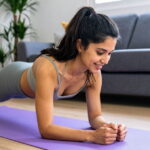


Have you ever wondered how to build stronger arms, shoulders, and back without stepping into a gym? Upper body strength is essential not only for aesthetic appeal but also for improving posture, increasing functional strength, and supporting daily movements.
With just a few dumbbells or even bodyweight, you can target every major muscle group in your upper body while staying at home.
Whether you are a beginner or looking to complement your current fitness routine, these exercises are designed to be simple, effective, and easy to integrate into your weekly schedule. Strengthening your upper body has never been more accessible.
1. Bent Over Dumbbell Row
The bent-over dumbbell row is a fundamental upper-body exercise that targets the back, shoulders, and arms while engaging the core. By maintaining a hip-hinged position and pulling the weights toward your torso, this movement improves posture, strengthens the lats, traps, and rhomboids, and balances muscular strength across the upper body.
It also enhances pulling power, which is useful for functional tasks like lifting and carrying objects, while stabilizing the spine and reducing the risk of injury from weak upper back muscles.
How to Do It?
- Stand with feet shoulder-width apart while holding a dumbbell in each hand.
- Hinge at the hips, keeping your back straight, chest lifted, and core engaged, with a slight bend in your knees.
- Allow the dumbbells to hang naturally in front of you with palms facing each other.
- Pull the dumbbells toward your lower ribs by bending your elbows, ensuring the shoulder blades squeeze together at the top of the movement.
- Pause briefly at the top to maximize contraction, then slowly lower the dumbbells back to the starting position, maintaining control throughout the descent.
- Keep your head in line with your spine and avoid rounding your back, maintaining core tension throughout the exercise.
How It Helps:
Bent over rows strengthen the entire posterior chain of the upper body, targeting the lats, traps, and rhomboids while stabilizing the spine. Improved back strength enhances posture, supports shoulder health, and increases pulling power, which is crucial for daily tasks and balanced upper body development.
2. Dumbbell Bicep Curls
Dumbbell bicep curls are a classic arm exercise that isolates and strengthens the biceps while also engaging the forearms for stability. This movement helps improve arm shape, increases pulling strength, and enhances joint support for activities like lifting, carrying, and pushing.
By performing curls in a controlled manner, you minimize the risk of momentum taking over, which ensures maximum muscle activation. This exercise can be modified by using a single arm or alternating arms to further challenge coordination and core engagement.
How to Do It?
- Stand tall with feet hip-width apart, holding a dumbbell in each hand with palms facing forward.
- Keep your elbows tucked close to your sides and engage your core to avoid swinging your torso.
- Slowly curl the dumbbells upward toward your shoulders, maintaining a controlled movement and focusing on contracting the biceps.
- Hold for a brief moment at the top, squeezing the bicep fully before lowering the weights back down.
- Extend the arms fully at the bottom to ensure a complete range of motion, keeping tension on the muscles throughout.
- Avoid swinging the dumbbells or using momentum; the movement should be slow, deliberate, and controlled for maximum effectiveness.
- Alternate arms or perform simultaneous curls depending on preference, ensuring proper posture and alignment throughout the set.
How It Helps:
Bicep curls strengthen the front of the upper arm, improving lifting capacity and functional strength. Controlled curls enhance forearm stability, arm definition, and joint support, making everyday activities like carrying groceries or lifting objects easier and safer while preventing muscular imbalances.
3. Dumbbell Chest Press
The dumbbell chest press is a staple for upper body strength, targeting the pectoral muscles while also engaging the shoulders and triceps. Performing the press from the floor or a bench provides stability while allowing the chest muscles to perform maximum work without overstraining the shoulders.
This exercise enhances pushing strength, improves muscular endurance, and promotes balanced upper body development. It can be performed with light or heavy weights depending on your level, making it adaptable for beginners or those seeking to challenge themselves further.
How to Do It?
- Lie on your back with knees bent and feet planted flat on the floor or a bench, holding a dumbbell in each hand at chest level.
- Position your elbows slightly downward rather than flaring directly out to protect your shoulder joints.
- Press the dumbbells upward until your arms are nearly fully extended, keeping a slight bend at the elbows.
- Squeeze your chest muscles at the top of the movement and hold for a brief moment.
- Slowly lower the weights back down until your elbows lightly touch the floor or bench, controlling the descent to maintain tension in the chest.
- Keep your shoulder blades retracted and your core engaged throughout the movement to protect the lower back and maintain proper alignment.
- Repeat in a controlled rhythm, avoiding bouncing or rapid movements for maximum muscle activation.
How It Helps:
The chest press strengthens the pectorals, triceps, and anterior deltoids while improving pushing power and muscular endurance. It enhances upper body symmetry, supports shoulder health, and contributes to functional strength for tasks that involve pushing or lifting overhead.
4. Dumbbell Tricep Extensions
Tricep extensions focus on the back of the arms, targeting the triceps brachii to build strength and definition. By extending the elbows while keeping the upper arms stable, this movement isolates the triceps, increasing arm power and improving overall upper body balance.
Performing this exercise overhead enhances the stretch and contraction of the triceps, while also engaging stabilizing muscles in the shoulders and core. Variations can be done seated or standing, using one or two dumbbells to adjust intensity and ensure proper form for optimal results.
How to Do It?
- Sit or stand tall, holding a dumbbell with both hands, keeping the palms facing upward.
- Raise the dumbbell overhead until your arms are fully extended with elbows pointing forward.
- Slowly bend the elbows to lower the weight behind your head, maintaining control and ensuring the upper arms remain stationary.
- Focus on the triceps contraction as you press the dumbbell back up to the starting position.
- Keep your core engaged to avoid arching your lower back and maintain proper posture throughout the movement.
- Perform repetitions in a controlled manner, pausing briefly at the top to maximize tension in the triceps before lowering.
- Modify by using a single arm or lighter weight if needed, gradually increasing as strength improves.
How It Helps:
Tricep extensions strengthen the back of the upper arms, improving overall arm power and definition. Strong triceps support functional movements such as pushing, lifting, and overhead motions, while also balancing the strength between the front and back of the arms to prevent muscular imbalances.
5. Dumbbell Shoulder Press
The dumbbell shoulder press targets the deltoid muscles while engaging the triceps and upper chest for a full upper body workout. Pressing weights overhead enhances shoulder strength, stability, and range of motion, which is essential for daily tasks and athletic performance.
This movement improves posture by strengthening the muscles around the shoulder joint and helps prevent injuries from weak or unstable shoulders.
Maintaining a controlled tempo ensures optimal activation of the deltoids and surrounding muscles, and the exercise can be done standing to engage the core or seated for added stability.
How to Do It?
- Stand with feet hip-width apart, holding a dumbbell in each hand at shoulder height with palms facing forward and elbows slightly forward.
- Engage your core and maintain a neutral spine, avoiding arching the lower back.
- Press the dumbbells straight up overhead until your arms are nearly fully extended, keeping a slight bend in the elbows.
- Pause briefly at the top to maintain tension in the shoulder muscles before lowering the dumbbells with control back to shoulder height.
- Avoid letting your elbows flare directly out to the sides; keep them slightly forward for proper alignment.
- Perform the movement slowly and deliberately to prevent using momentum and to maximize deltoid activation.
- Repeat for the desired number of repetitions, focusing on controlled breathing and shoulder stability throughout each press.
How It Helps:
The shoulder press strengthens the deltoids, triceps, and upper chest while improving shoulder stability and overhead strength. It enhances posture, supports functional movements such as lifting and reaching, and reduces the risk of shoulder injuries by building muscular balance and endurance.
6. Crossbody Dumbbell Front Raise
The cross-body front raise is an effective exercise for targeting the front deltoids and upper chest while also engaging the core for stability. This movement encourages controlled lifting and precise muscle activation, helping improve shoulder strength and functional mobility.
Unlike traditional front raises, the cross-body variation allows a slightly diagonal path, which enhances the range of motion and prevents overuse of the shoulder joint. It also improves arm coordination and endurance, making it ideal for a comprehensive upper body routine that can be done at home.
How to Do It?
- Stand tall with feet shoulder-width apart, holding a dumbbell in each hand at your sides with palms facing inward.
- Engage your core and maintain a neutral spine throughout the exercise.
- Lift one dumbbell across your body toward the opposite shoulder, keeping a slight bend in the elbow to reduce joint strain.
- Focus on squeezing your chest and front deltoid muscles as you lift the weight to just below shoulder height.
- Slowly lower the dumbbell back to your side in a controlled motion, avoiding any swinging or jerking.
- Alternate arms for each repetition, maintaining consistent breathing and steady tempo to maximize activation.
- Keep your shoulders relaxed and avoid shrugging them toward your ears while performing the movement.
How It Helps:
Crossbody front raises strengthen the anterior deltoids and upper chest while enhancing shoulder mobility and stability. Controlled movements improve coordination and arm endurance, support functional lifting tasks, and reduce the risk of shoulder injuries from weak stabilizing muscles.
7. Plank Dumbbell Row
The plank dumbbell row is a hybrid exercise that combines core engagement with upper back and arm strengthening. This move challenges the lats, traps, rhomboids, and biceps while simultaneously activating the abdominals, obliques, and stabilizing muscles.
Performing the movement in a plank position also improves shoulder stability and overall body control. By incorporating dumbbells, resistance is added to intensify the workout, making it suitable for building both strength and endurance in one compound movement.
How to Do It?
- Begin in a high plank position with a dumbbell in each hand, directly under the shoulders, and feet hip-width apart.
- Engage your core, keeping your body in a straight line from head to heels without sagging or arching the back.
- Lift one dumbbell toward your torso by bending the elbow, keeping your shoulder blade squeezed at the top.
- Slowly lower the weight back down to the floor with control, maintaining a stable plank position throughout.
- Repeat on the opposite side, alternating arms for the duration of the set.
- Keep hips square and avoid twisting the torso; subtle core engagement helps stabilize the body.
- Focus on controlled breathing and deliberate movement rather than speed to maximize upper back and arm activation.
How It Helps:
Plank dumbbell rows target the upper back, biceps, and stabilizing shoulder muscles while engaging the core for full-body strength. They improve posture, enhance pulling power, and support shoulder stability during functional and athletic activities.
8. Push-Up to Side Plank
The push-up to side plank is a dynamic upper body exercise that combines chest, triceps, and shoulder strengthening with core rotation. By transitioning from a push-up into a side plank, you engage obliques, stabilizing muscles, and improve balance and coordination.
This movement enhances muscular endurance and challenges multiple muscle groups simultaneously. The push-up to side plank is ideal for runners, fitness enthusiasts, or anyone seeking to strengthen their upper body and core in a single, fluid exercise.
How to Do It?
- Begin in a high plank position with hands shoulder-width apart and body in a straight line from head to heels.
- Lower your chest toward the floor by bending your elbows while keeping your back flat and core tight.
- Push back up to the starting plank position, then lift one arm toward the ceiling as you rotate your torso into a side plank.
- Stack your feet or keep them slightly staggered for stability while holding the side plank briefly.
- Return to the high plank position and perform another push-up, repeating the side plank rotation on the opposite side.
- Maintain controlled movements, focusing on stability and core engagement to prevent hip sagging or twisting.
- Breathe steadily and avoid rushing through repetitions to ensure proper muscle activation throughout the exercise.
How It Helps:
Push-up to side plank strengthens the chest, shoulders, and triceps while simultaneously engaging the core and obliques. It improves rotational stability, balance, and endurance, providing a functional upper body workout that supports daily movements and athletic performance.
9. Kettlebell or Dumbbell Swing
The kettlebell or dumbbell swing is a full-body movement that emphasizes shoulder, back, and arm strength while incorporating dynamic hip and core engagement.
This exercise builds explosive power, improves coordination, and enhances endurance. Using a controlled swing motion helps strengthen the posterior chain, especially the shoulders and upper back, while also developing grip strength.
Dumbbells can substitute for kettlebells, making this exercise accessible for home workouts and effective for both beginners and advanced trainees seeking a compound upper body movement.
How to Do It?
- Stand with feet shoulder-width apart, holding a kettlebell or dumbbell with both hands in front of your hips.
- Slightly bend the knees and hinge at the hips, keeping your back straight, chest lifted, and core engaged.
- Swing the weight backward between your legs, then thrust your hips forward to swing it up to shoulder height or slightly above.
- Maintain a neutral spine throughout the swing, letting the hips drive the motion rather than the arms.
- Allow the weight to swing back down naturally, controlling the descent and preparing for the next repetition.
- Keep your shoulders engaged and avoid over-arching your lower back while performing the movement.
- Repeat in a continuous rhythm, ensuring full control, stability, and proper breathing during each swing.
How It Helps:
Kettlebell or dumbbell swings strengthen the shoulders, upper back, and arms while activating the core and hips. This explosive movement improves power, endurance, and coordination, making it an effective compound exercise for functional upper body strength.
10. Tricep Dips
Tricep dips are a bodyweight exercise that effectively isolates the triceps while also engaging the shoulders, chest, and core. By lowering and lifting your body using a stable surface, you improve upper arm strength, tone muscles, and enhance pushing capacity.
This exercise is versatile and can be performed on a chair, bench, or sturdy surface, making it ideal for at-home workouts. It also promotes shoulder stability and functional strength for everyday tasks such as lifting, pushing, or reaching overhead.
How to Do It?
- Sit on the edge of a stable surface like a chair or bench, placing your hands beside your hips with fingers pointing forward.
- Walk your feet forward, extending your legs and shifting your weight onto your hands, keeping elbows slightly bent.
- Lower your body toward the floor by bending your elbows to approximately 90 degrees while keeping your back close to the surface.
- Push through your palms to straighten your arms and lift your body back to the starting position.
- Keep your core engaged and shoulders away from your ears throughout the movement.
- Avoid locking elbows at the top to maintain tension on the triceps and prevent joint strain.
- Perform repetitions in a controlled manner, focusing on the contraction of the triceps and stability of the shoulder joints.
How It Helps:
Tricep dips target the back of the arms, enhancing strength, definition, and muscular endurance. They support functional movements, improve pushing ability, and stabilize the shoulders, contributing to balanced upper body development.
11. Shoulder Press
The shoulder press is a classic upper-body exercise that targets the deltoids, triceps, and upper chest while improving shoulder stability. Performing this movement with dumbbells allows for a natural range of motion and strengthens the muscles required for pressing motions.
It also engages the core to maintain balance and proper posture, making it an essential addition to any home upper body routine. Controlled lifting and lowering help build endurance, coordination, and overall upper body power.
How to Do It?
- Stand with feet shoulder-width apart, holding dumbbells at shoulder height with palms facing forward.
- Keep your back straight, core engaged, and shoulders slightly forward to prevent strain.
- Press the dumbbells upward in a controlled motion until your arms are fully extended but elbows slightly bent.
- Slowly lower the weights back down to shoulder level, maintaining tension in the shoulder muscles.
- Avoid arching your lower back or locking your elbows at the top of the movement.
- Breathe steadily, exhaling as you press up and inhaling as you lower the dumbbells.
- Perform repetitions in a controlled, deliberate tempo to maximize shoulder engagement and safety.
How It Helps:
Shoulder presses strengthen the deltoids, triceps, and upper chest while improving posture, functional strength, and pressing ability. They enhance overall upper body endurance and stability, supporting everyday lifting and overhead movements.
12. Bent Over Row
The bent-over row targets the upper back, lats, rhomboids, and biceps, while also engaging the core to maintain posture. This exercise strengthens pulling muscles and supports proper shoulder alignment, reducing the risk of back injuries.
Using dumbbells provides flexibility in weight selection and ensures balanced development on both sides. Performing the row with proper form improves posture, back strength, and upper body control, making it ideal for home workouts without a bench.
How to Do It?
- Stand with feet hip-width apart, holding a dumbbell in each hand with palms facing inward.
- Hinge at the hips, keeping your back straight, chest lifted, and knees slightly bent.
- Let the dumbbells hang naturally in front of your legs, maintaining a neutral spine.
- Pull the dumbbells toward your torso by driving elbows backward, squeezing shoulder blades together at the top.
- Slowly lower the weights back to the starting position in a controlled motion, avoiding jerky movements.
- Keep your core engaged throughout to protect your lower back and maintain stability.
- Repeat for the desired number of repetitions, alternating breathing with each row.
How It Helps:
Bent over rows strengthen the upper back and biceps, improving posture, shoulder stability, and pulling strength. They enhance upper body endurance and provide support for daily lifting and athletic activities.
13. Commandos
Commandos are a challenging plank-based exercise that targets the triceps, shoulders, chest, and core. This movement improves upper body stability, strength, and endurance while engaging multiple muscle groups simultaneously.
Transitioning between elbows and hands also activates stabilizing muscles around the shoulders, promoting joint health and coordination. Commandos are effective for home workouts because they require no equipment and can be modified to suit all fitness levels.
How to Do It?
- Begin in a forearm plank with elbows under your shoulders and body in a straight line from head to heels.
- Press up onto one hand, followed by the other, transitioning into a high plank position with arms fully extended.
- Lower one arm back down to the forearm plank, followed by the other arm, maintaining core engagement.
- Continue alternating arms for the set duration, focusing on controlled and deliberate movements.
- Keep your hips level, avoiding sagging or twisting during transitions.
- Breathe steadily, exhaling as you press up and inhaling as you lower down.
- Modify by dropping knees if needed while maintaining proper form and engagement of the core and upper body.
How It Helps:
Commandos strengthen the triceps, shoulders, and chest while engaging the core for stability. They improve functional strength, upper body endurance, and coordination, making them an effective bodyweight exercise for home workouts.
14. Arm Circles
Arm circles are a simple yet effective exercise for warming up the shoulders and improving mobility, endurance, and coordination. They target the deltoids while also engaging stabilizing muscles in the shoulders and upper back.
This movement can be performed with or without light dumbbells to enhance resistance, making it suitable for home workouts of all fitness levels. Arm circles complement other strength exercises by improving the range of motion and preparing the upper body for dynamic movements.
How to Do It?
- Stand tall with feet shoulder-width apart, arms extended straight out to the sides at shoulder height.
- Slowly rotate your arms forward in small circular motions, gradually increasing the size of the circles.
- Complete the desired number of repetitions, then reverse direction to rotate backward.
- Keep your core engaged and shoulders relaxed, avoiding shrugging or tensing the neck.
- Maintain steady breathing and controlled movements, focusing on muscle activation rather than speed.
- For added resistance, hold light dumbbells in each hand, ensuring smooth and stable motion.
- Perform repetitions deliberately, maintaining control and full range of motion throughout the exercise.
How It Helps:
Arm circles improve shoulder mobility, deltoid endurance, and joint stability while enhancing coordination. They prepare muscles for more intense upper body exercises and support injury prevention through increased flexibility and strength.
15. Push-Ups
Push-ups are a foundational upper-body exercise that strengthens the chest, shoulders, triceps, and core simultaneously. This bodyweight movement promotes muscular endurance, functional strength, and proper posture.
Variations such as incline, decline, or knee push-ups allow adaptation to different fitness levels. Push-ups are convenient for home workouts as they require no equipment, making them an essential component of any upper-body routine.
How to Do It?
- Begin in a high plank position with hands slightly wider than shoulder-width apart and body in a straight line.
- Engage your core, keeping your back flat and hips aligned with the body.
- Bend your elbows to lower your chest toward the floor while maintaining a neutral spine.
- Pause briefly at the bottom, then press back up to the starting position by straightening your arms.
- Ensure your elbows are not flaring out excessively; maintain a controlled, steady pace.
- Breathe steadily, inhaling as you lower and exhaling as you press upward.
- Modify by dropping knees or using an elevated surface if needed to maintain proper form and avoid strain.
How It Helps:
Push-ups strengthen the chest, shoulders, triceps, and core, improving muscular endurance, stability, and functional upper body strength. They support everyday pushing movements and enhance overall upper body coordination and balance.
Safety Tips For Performing Crunches
When performing crunches, proper form and precautions are crucial to avoid strain on the neck, spine, and lower back.
- Always lie on a flat, supportive surface, preferably a mat, and keep your knees bent with feet flat on the floor.
- Avoid pulling your head forward with your hands; instead, gently support your head with your fingertips while engaging your core to lift your shoulders.
- Focus on slow, controlled movements rather than speed, ensuring that the lower back remains pressed against the floor to prevent arching.
- Exhale as you contract the abdominal muscles and inhale as you return to the starting position.
- Limit the range of motion to avoid unnecessary neck strain and stop immediately if you feel discomfort or pain.
- Maintain consistent breathing, avoid jerky movements, and include rest periods between sets to allow proper recovery.
- Gradually increase repetitions as your core strength improves, and consider consulting a fitness professional if unsure about form.
Conclusion
Incorporating these 15 upper-body exercises into your home routine can significantly improve strength, endurance, and overall functional fitness. Regular practice strengthens the arms, shoulders, chest, and back while engaging the core, enhancing balance and coordination. Consistency is key, and even brief daily sessions can lead to noticeable results in tone, power, and upper body health.