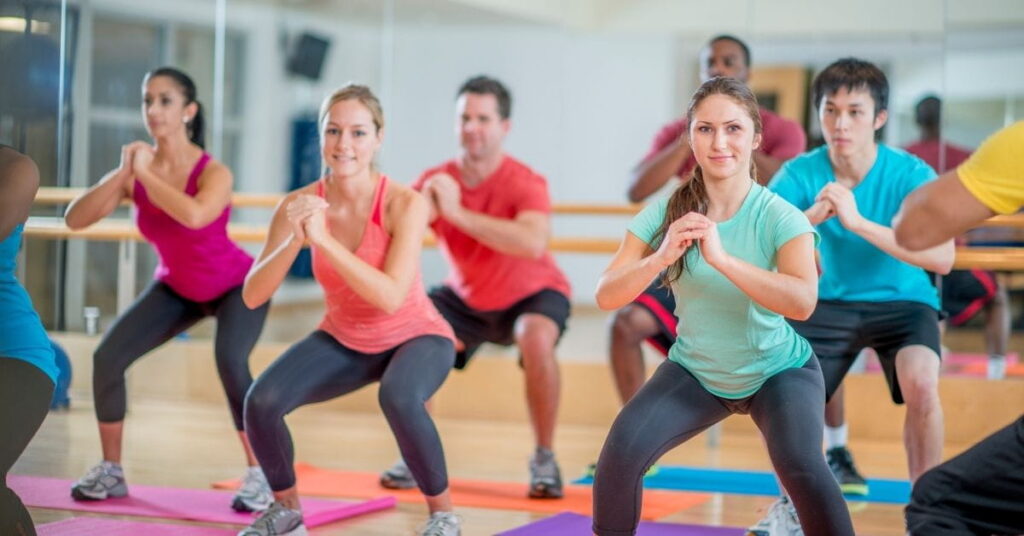
Have you ever wondered why squats are often considered the ultimate lower-body exercise, capable of transforming strength, balance, and functional fitness simultaneously?
Squats are not just about building muscular legs; they engage multiple muscle groups, including quads, glutes, hamstrings, calves, and even your core, making every rep a full-body effort.
Whether you are a beginner looking for simple movement patterns or an experienced fitness enthusiast seeking challenging variations, incorporating dumbbell squats into your routine can improve your daily functionality, enhance athletic performance, and burn calories efficiently.
This guide explores 15 highly effective dumbbell squat variations designed for everyday fitness, helping you strengthen, tone, and challenge your lower body like never before.
1. Front Squat
The Front Squat targets the quadriceps primarily while also engaging the glutes and shoulders, helping to build balanced lower body strength.
Holding dumbbells at shoulder height increases resistance, improving muscle tone and overall stability. This variation encourages a strong, upright posture and is suitable for both beginners and advanced trainees who want to develop powerful thighs and a strong core.
How to Do It?
- Stand with feet shoulder-width apart and hold a dumbbell in each hand at shoulder level with palms facing each other.
- Keep your chest up, back flat, and core braced for stability.
- Slowly bend your knees and hips, lowering your body until your thighs are parallel to the floor.
- Pause for a moment at the bottom, feeling the contraction in your quads and glutes.
- Push through your heels to return to the starting position, maintaining upright posture.
- Breathe steadily, exhaling as you rise and inhaling as you lower.
- Repeat for the desired number of reps, keeping the movement slow and controlled.
How It Helps:
The Front Squat strengthens the quads, glutes, and shoulders, improving functional strength for everyday activities such as lifting, walking, or climbing stairs. It enhances lower-body power, core stability, and balance, making it a foundational exercise for both general fitness and athletic performance.
2. Split Squat
The Split Squat isolates the quads and glutes while also engaging the hamstrings, providing unilateral strength development that balances muscular symmetry.
Holding dumbbells adds resistance, making the movement more challenging and effective for improving leg strength, hip stability, and overall lower body coordination.
How to Do It?
- Stand in a split stance with one foot forward and the other foot back, holding a dumbbell in each hand at your sides.
- Keep your torso upright and core engaged while lowering your body by bending both knees until your rear knee nearly touches the floor.
- Ensure your front knee stays aligned with your ankle and does not move past the toes.
- Push through the heel of your front foot to return to the starting position.
- Repeat the movement on the opposite leg to maintain balance and symmetry.
- Perform the exercise slowly to maintain proper form and prevent injury.
How It Helps:
Split Squats improve unilateral leg strength, enhancing balance, stability, and hip mobility. They correct muscular imbalances between legs, support better posture, and develop functional lower body strength that is critical for daily movements and athletic performance.
3. Goblet Squat
The Goblet Squat emphasizes quad development while also activating the glutes and core. Holding a dumbbell close to your chest allows a deeper squat, improving mobility and strength.
This exercise is beginner-friendly, yet highly effective for building muscle endurance and enhancing balance throughout the movement.
How to Do It?
- Hold a single dumbbell vertically against your chest with both hands and stand with feet shoulder-width apart.
- Keep your chest up, shoulders back, and core braced to maintain stability.
- Lower your body by bending your knees and pushing your hips back until your glutes are just above parallel to the floor.
- Pause for a moment at the bottom, feeling the tension in your quads and glutes.
- Push through your heels to return to the starting position.
- Maintain slow, controlled movements to prevent forward leaning or knee misalignment.
- Repeat for the desired number of repetitions while keeping the dumbbell close to your chest.
How It Helps:
Goblet Squats strengthen the quads, glutes, and core, while improving squat depth and overall lower body mobility. The close weight positioning enhances balance, making this variation effective for beginners and advanced lifters who want stronger, more defined legs.
4. Cossack Squat
The Cossack Squat focuses on adductors, outer quads, glutes, and abdominals, offering a lateral movement that enhances hip flexibility and mobility.
Holding dumbbells adds resistance, increasing the intensity while building strength in muscles that are often neglected in traditional squats.
How to Do It?
- Stand with feet wider than shoulder-width apart and hold a dumbbell in each hand at shoulder height.
- Shift your body weight to one side, bending the knee while keeping the opposite leg straight.
- Lower your hips as far as flexibility allows without rounding the back.
- Pause at the bottom, then push through the bent leg to return to the center.
- Repeat the movement to the opposite side for a full rep, keeping core engaged.
- Maintain controlled movement to prevent loss of balance.
- Perform for the recommended repetitions, focusing on deep, deliberate squats.
How It Helps:
Cossack Squats strengthen the inner and outer thighs, glutes, and core while improving hip mobility and lateral stability. This movement supports functional fitness, reduces the risk of lower-body injuries, and enhances overall leg symmetry.
5. Changing Arm Squat Pulses
Changing Arm Squat Pulses are a high-intensity variation that keeps quads and glutes under constant tension. Alternating dumbbells between arms increases cardiovascular demand while promoting muscular endurance and lower body strength. This dynamic movement challenges coordination and stamina.
How to Do It?
- Hold a dumbbell in your right hand and stand with feet shoulder-width apart, arms straight between your legs.
- Lower into a squat until your thighs are parallel to the floor.
- Slightly extend your knees without standing completely upright, then switch the dumbbell to your left hand.
- Repeat the squat pulse, alternating arms for each repetition.
- Keep your back flat and core engaged throughout the movement.
- Perform the exercise for the desired repetitions, maintaining steady breathing.
- Focus on controlled pulses to maximize muscle tension and endurance.
How It Helps:
This exercise improves lower-body strength, muscular endurance, and cardiovascular fitness simultaneously. Alternating arms while pulsing increases focus, coordination, and calorie burn, making it highly effective for full-body conditioning and functional leg strength.
6. Single-Arm Suitcase Squat
The Single-Arm Suitcase Squat works each leg individually while targeting the quads and glutes. Holding a dumbbell in one hand challenges balance and stability, engaging the core for proper posture.
This unilateral movement helps correct strength imbalances and improves coordination, making it suitable for both beginners and advanced fitness enthusiasts.
How to Do It?
- Hold a dumbbell in your right hand at your side while standing upright with feet hip-width apart.
- Extend your left arm straight in front of you to assist with balance.
- Slowly bend your knees and hips, lowering into a squat as deep as possible while keeping your chest upright.
- Pause at the bottom, feeling the contraction in your quads and glutes.
- Push through the heel of the front foot to return to the starting position.
- Repeat for 10–12 reps, then switch the dumbbell to the opposite hand and perform on the other side.
- Maintain steady, controlled motion to avoid tipping or losing balance.
How It Helps:
The Single-Arm Suitcase Squat improves unilateral leg strength, core stability, and balance. It helps correct muscular imbalances between legs and strengthens the glutes and quads, enhancing lower body function and coordination for daily activities and sports performance
7. Bulgarian Split Squat
The Bulgarian Split Squat isolates the quads, glutes, and hamstrings while improving balance and flexibility. Elevating the rear foot increases the range of motion, intensifying the work on the front leg. Holding dumbbells adds resistance, boosting strength and functional lower body power.
How to Do It?
- Stand a few feet away from a bench with a dumbbell in each hand at your sides.
- Place the top of your rear foot on the bench behind you.
- Keep your chest up, core engaged, and torso upright as you bend your front knee to lower your body.
- Lower until the front thigh is parallel to the floor while keeping your rear knee close to the ground.
- Push through your front heel to return to standing.
- Repeat for the desired number of reps, then switch legs to ensure balance and symmetry.
- Maintain slow, controlled movements, focusing on proper alignment and hip mobility.
How It Helps:
Bulgarian Split Squats strengthen the quads, glutes, and hamstrings while improving unilateral leg stability and hip mobility. This exercise also helps correct muscle imbalances, enhances balance, and increases functional lower body strength for everyday movements.
8. Dumbbell Sumo Squat
The Dumbbell Sumo Squat targets the inner thighs, glutes, and quads while challenging hip mobility and balance. The wide stance and outward toe positioning provide a unique angle for muscle activation, making this variation excellent for sculpting proportional legs and improving lower body strength.
How to Do It?
- Stand with feet wider than shoulder-width apart, toes pointing outward, holding a single dumbbell with both hands in front of your body.
- Keep your chest upright and core engaged while lowering into a squat by bending your knees and pushing your hips back.
- Squat until your glutes are just above the floor, maintaining a straight back.
- Pause briefly, then press through your heels to return to standing.
- Repeat for the desired repetitions, focusing on controlled movement and even weight distribution across both feet.
- Ensure knees follow the direction of your toes to protect joints.
How It Helps:
Sumo Squats strengthen the inner thighs, quads, and glutes while enhancing hip flexibility and balance. This variation works muscles from a different angle than traditional squats, helping to create proportional, toned legs and improve overall lower body function.
9. Dumbbell Hack Squat
The Dumbbell Hack Squat emphasizes the front thigh while engaging glutes and improving balance. Elevating the heels on a platform increases quad activation and ankle mobility, making it an effective exercise for both strength and functional lower body development.
How to Do It?
- Stand with heels on a raised platform or weight plates, toes on the ground, holding a dumbbell in each hand at your sides.
- Keep your torso upright and core engaged as you bend your knees to lower into a squat.
- Go as deep as your mobility allows while maintaining balance and keeping your back flat.
- Push through your heels to extend your knees and return to the starting position.
- Maintain a controlled pace to prevent tipping or knee strain.
- Repeat for the desired number of reps, focusing on full range of motion and proper form.
How It Helps:
Hack Squats isolate the quads while also working the glutes and stabilizers. Heel elevation enhances ankle flexibility, knee alignment, and balance, making it ideal for developing strong, functional legs and improving overall lower body performance.
10. Dumbbell Squat Jump
The Dumbbell Squat Jump is a plyometric variation that builds explosive power while strengthening quads, glutes, and core. Incorporating dumbbells adds resistance, increasing the intensity and calorie burn. This movement enhances athletic performance, agility, and cardiovascular fitness.
How to Do It?
- Stand upright with feet shoulder-width apart, holding a dumbbell in each hand at your sides.
- Lower into a half squat while keeping your chest upright and core engaged.
- Explosively jump upward, extending your arms overhead or keeping them at your sides for balance.
- Land softly on your feet in a semi-squat position to absorb impact.
- Immediately repeat the jump for the recommended repetitions, maintaining control and rhythm.
- Keep your spine neutral and knees aligned with your toes to avoid joint stress.
- Focus on smooth transitions between landing and jumping to maximize power and reduce injury risk.
How It Helps:
Squat Jumps strengthen the lower body while improving explosive power, agility, and endurance. Adding dumbbells increases resistance, boosting calorie burn, promoting muscle growth, and enhancing cardiovascular performance in one dynamic exercise.
11. Dumbbell Squat to Press
The Dumbbell Squat to Press is a compound movement that combines lower-body strength with upper-body engagement. By pressing dumbbells overhead after a squat, this exercise works quads, glutes, shoulders, and core simultaneously, improving full-body coordination, strength, and calorie burn.
How to Do It?
- Hold a dumbbell in each hand at shoulder height with palms facing each other.
- Perform a standard squat by bending your knees and pushing your hips back while keeping your chest up.
- As you rise from the squat, press the dumbbells overhead until your arms are fully extended.
- Slowly lower the weights back to shoulder level while maintaining a stable stance.
- Keep your core engaged throughout the movement to protect your lower back.
- Repeat for the desired number of repetitions, focusing on smooth transitions between squat and press.
- Maintain a controlled pace to maximize muscle engagement and prevent strain.
How It Helps:
Squat to Press builds strength in both the lower and upper body while enhancing functional fitness. It improves cardiovascular endurance, coordination, and power, making it a highly efficient full-body exercise for everyday fitness.
12. Overhead Dumbbell Squat
The Overhead Dumbbell Squat targets the quads, shoulders, glutes, and core. Holding dumbbells overhead challenges balance, shoulder mobility, and core stability, making it an effective functional movement for overall strength and posture.
How to Do It?
- Hold a dumbbell in each hand above your head with straight arms, feet hip-width apart.
- Brace your core and maintain a neutral spine.
- Slowly squat down by bending your knees and pushing your hips back, keeping arms extended overhead.
- Squat as deep as mobility allows without letting your chest collapse forward.
- Push through your heels to return to the standing position while keeping the dumbbells overhead.
- Perform the exercise for the recommended reps with controlled breathing.
- Focus on balance and shoulder stability throughout each repetition.
How It Helps:
Overhead Squats increase strength, stability, and mobility in the legs, shoulders, and core. This functional movement improves posture, balance, and total-body coordination, helping you perform daily tasks and athletic movements more efficiently.
13. Dumbbell Skater Squat
The Dumbbell Skater Squat is a single-leg variation that targets quads, glutes, hamstrings, and core. By performing it unilaterally with dumbbells, it challenges balance, coordination, and lower body symmetry while enhancing functional movement patterns.
How to Do It?
- Stand with feet together, holding a dumbbell in each hand at your sides.
- Bend your right knee and bring the foot behind you as you lower into a squat on the left leg.
- Lean slightly forward, keeping the spine neutral and arms raised or at your sides for balance.
- Push through the heel of the front leg to return to standing.
- Repeat on the opposite leg for an equal number of reps.
- Perform slowly and controlled to maintain balance and prevent knee strain.
- Focus on depth and engagement of glutes and quads throughout each rep.
How It Helps:
The Skater Squat improves unilateral strength, balance, and coordination. It helps correct leg imbalances, strengthens stabilizer muscles, and enhances athletic performance while sculpting the quads and glutes.
14. Dumbbell Squat Clean
The Dumbbell Squat Clean is a dynamic exercise that combines explosive power and strength training. It targets quads, glutes, shoulders, and core while improving speed, coordination, and overall athleticism.
How to Do It?
- Stand with feet shoulder-width apart, holding a dumbbell in each hand at your sides.
- Push your hips back and squat down, keeping a neutral spine and core engaged.
- Explosively drive through your heels while shrugging the dumbbells to catch them on your shoulders.
- Extend hips and knees to return to standing, then optionally press dumbbells overhead.
- Maintain a controlled, fluid motion throughout the lift.
- Repeat for the desired number of repetitions, focusing on speed, form, and full-body engagement.
- Ensure wrists and shoulders remain stable to prevent strain during the explosive lift.
How It Helps:
Squat Clean develops full-body strength, explosive power, and coordination. It increases calorie burn, enhances athletic performance, and strengthens the quads, glutes, shoulders, and core simultaneously.
15. Dumbbell Curtsy Squat
The Dumbbell Curtsy Squat targets the thighs, glutes, and core while improving balance and hip mobility. Crossing one leg behind the other activates stabilizer muscles and adds variety to lower-body training, promoting proportional leg development.
How to Do It?
- Hold a dumbbell close to your chest and stand with feet hip-width apart.
- Step your right leg diagonally behind your left leg, lowering into a curtsy squat.
- Bend both knees to lower your body while keeping your chest upright and core engaged.
- Push through the front heel to return to the starting position.
- Repeat for the desired number of reps, then switch legs to ensure symmetry.
- Maintain controlled, deliberate movements to protect knees and balance.
- Focus on depth and glute engagement for maximum effectiveness.
How It Helps:
Curtsy Squats strengthen quads, glutes, and core while improving balance, stability, and hip mobility. This movement also targets inner and outer thighs, helping create toned, proportionate legs.
Conclusion
Incorporating these 15 dumbbell squat variations into your everyday fitness routine strengthens your lower body, improves balance, and builds functional strength. By alternating exercises, focusing on proper form, and challenging both sides of your body, you can enhance muscle tone, joint stability, and overall lower body performance efficiently and safely.
Conclusion
Incorporating these 15 dumbbell squat variations into your everyday fitness routine strengthens your lower body, improves balance, and builds functional strength. By alternating exercises, focusing on proper form, and challenging both sides of your body, you can enhance muscle tone, joint stability, and overall lower body performance efficiently and safely.