
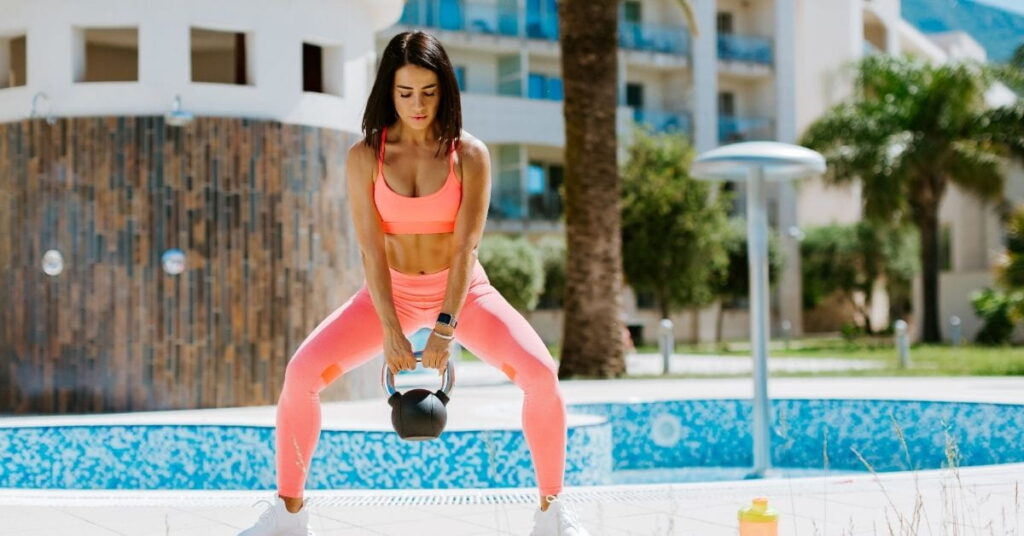

Have you ever wished you could build muscle, burn fat, and improve endurance without spending hours at the gym? Kettlebell training might be exactly what you need. Unlike traditional strength tools, kettlebells combine power, control, balance, and cardio into one highly effective workout style.
With just one piece of equipment, you can target multiple muscle groups at once while increasing stability and coordination. Whether you’re a beginner or someone looking to refresh your routine, kettlebells provide versatility that fits nearly any fitness level.
From explosive swings to controlled presses, these movements train your entire body efficiently. If you want stronger glutes, a stable core, defined shoulders, and improved endurance, this guide will walk you through the best kettlebell workouts to help you get there.
Why Kettlebell Training Builds Real-World Strength?
Kettlebell training is one of the most efficient forms of strength and conditioning because it combines resistance training with cardiovascular demand in a single session.
Unlike traditional dumbbell exercises that often isolate one muscle group at a time, kettlebell movements are dynamic and involve multiple joints working together. This creates functional strength that transfers directly into everyday activities such as lifting, bending, carrying, and twisting.
One of the biggest advantages is improved core stability. Nearly every kettlebell movement requires your abdominal muscles, lower back, and obliques to stabilize your body while the weight shifts.
This strengthens deep stabilizing muscles that are often undertrained in machine-based workouts. As a result, posture improves and the risk of lower back discomfort decreases.
Kettlebell workouts also increase cardiovascular endurance. Explosive movements like swings, snatches, and clean variations raise your heart rate quickly.
You build stamina while strengthening muscles at the same time. This dual benefit makes kettlebell training highly time-efficient, especially for those with busy schedules.
Another major benefit is better coordination and balance. Because the weight sits below the handle, it constantly challenges stability. Your nervous system must adapt, improving body awareness and control. This leads to better athletic performance and smoother movement patterns.
Flexibility and mobility also improve through exercises like windmills and deep squats, which require a controlled range of motion.
In addition, kettlebell training promotes fat loss due to high calorie burn and muscle engagement. It is a powerful full-body workout that builds strength, endurance, mobility, and balance all in one approach.
Choosing the Right Kettlebell Weight for Your Goals
Selecting the right kettlebell weight depends on your current strength level, experience, and the type of exercises you plan to perform. Choosing a weight that is too light may not challenge your muscles enough, while a weight that is too heavy can compromise form and increase injury risk.
For beginners, it is generally recommended that women start with an 8–12 kg kettlebell (approximately 15–25 pounds) and men begin with 12–16 kg (approximately 25–35 pounds).
These ranges work well for foundational movements such as swings, goblet squats, and deadlifts. However, individual strength levels vary, so testing different weights before purchasing is helpful.
If you are focusing on single-arm exercises such as presses, snatches, or windmills, you may need a lighter kettlebell to maintain control. For lower-body exercises like sumo deadlifts or two-handed swings, you can typically handle a heavier load because larger muscle groups are involved.
Many experienced users eventually own more than one kettlebell. A lighter bell is ideal for overhead and core-focused work, while a heavier bell works best for hip-dominant exercises. If the budget allows, starting with two weights gives more flexibility in programming.
Proper form should always determine your choice. You should be able to complete your repetitions with stable posture, engaged core muscles, and controlled breathing.
When the weight feels manageable but still challenging during the final repetitions, you have likely chosen the right size for your current fitness level.
1. Kettlebell Swing
The kettlebell swing is a powerful hip-driven movement that trains the glutes, hamstrings, core, and shoulders simultaneously while building explosive strength and cardiovascular endurance.
This exercise teaches proper hip hinge mechanics and develops lower-body power without excessive strain on the knees. It is one of the most effective full-body movements because it combines strength and conditioning in one fluid action.
When performed correctly, the swing improves posture, boosts stamina, and strengthens the posterior chain. It is suitable for beginners who focus on form as well as advanced athletes seeking power and endurance improvements in a short amount of time.
How to Do It:
- Stand with your feet slightly wider than hip-width apart and place the kettlebell a few inches in front of you, keeping your chest lifted and shoulders pulled back.
- Hinge at your hips while keeping your back flat, bend your knees slightly, and grip the handle firmly with both hands.
- Hike the kettlebell back between your legs, keeping it high near your inner thighs while maintaining a strong core.
- Drive your hips forward explosively, allowing the kettlebell to swing upward naturally to chest height without lifting it using your arms.
- Keep your arms relaxed and straight, letting the momentum come entirely from your hip thrust.
- Control the descent by hinging again at the hips and guiding the kettlebell back between your legs.
- Repeat for controlled repetitions while maintaining neutral spine alignment and steady breathing.
How It Helps:
The kettlebell swing builds explosive hip strength, which improves performance in squats, jumps, and daily lifting tasks. It strengthens the glutes and hamstrings while engaging the core for stability.
Additionally, the continuous movement increases heart rate, improving cardiovascular endurance and calorie burn efficiently.
2. Kettlebell Goblet Squat
The kettlebell goblet squat is a lower-body strength exercise that targets the quadriceps, glutes, hamstrings, and core while reinforcing proper squat mechanics. Holding the kettlebell at chest level encourages an upright torso, which reduces strain on the lower back and improves posture.
This movement is excellent for beginners learning squat depth and alignment, yet it remains challenging for advanced lifters when performed with heavier loads.
Because the weight is positioned in front of the body, the core must stay engaged throughout the movement. The goblet squat develops leg strength, stability, and balance while promoting healthy knee tracking and hip mobility.
How to Do It:
- Stand with your feet shoulder-width apart and toes slightly turned outward while holding the kettlebell by the horns close to your chest.
- Keep your elbows pointed downward and your chest lifted to maintain an upright torso throughout the movement.
- Engage your core muscles and sit back into your hips as you bend your knees, lowering into a squat position.
- Keep your heels grounded and avoid letting your knees collapse inward as you descend.
- Lower until your thighs are at least parallel to the floor, or as deep as your mobility allows without rounding your back.
- Press firmly through your heels to return to standing, squeezing your glutes at the top.
- Maintain steady breathing and controlled tempo for each repetition.
How It Helps:
The goblet squat strengthens major lower-body muscles while reinforcing correct squat form. It improves hip mobility, builds core stability, and promotes balanced muscle development. Because of its front-loaded position, it also trains posture and coordination effectively.
3. Kettlebell Deadlift
The kettlebell deadlift is a foundational strength movement that targets the glutes, hamstrings, lower back, and core. It teaches the essential hip hinge pattern, which is necessary for safe lifting in daily life and advanced kettlebell exercises.
This movement builds posterior chain strength without excessive strain on the knees. By focusing on controlled movement and alignment, the kettlebell deadlift strengthens stabilizing muscles and improves overall body awareness.
It is ideal for beginners learning proper form and for experienced individuals who want to reinforce strength and technique while preventing injury during heavier compound lifts.
How to Do It:
- Stand with your feet hip-width apart and position the kettlebell between your feet.
- Push your hips back while bending your knees slightly, keeping your spine neutral and chest lifted.
- Grip the handle firmly with both hands while keeping your shoulders pulled back and down.
- Engage your core and drive through your heels to lift the kettlebell by extending your hips forward.
- Stand tall at the top without leaning backward, squeezing your glutes fully.
- Slowly reverse the movement by hinging at the hips and lowering the kettlebell along the front of your legs.
- Place the kettlebell back on the floor under control and repeat with proper posture maintained.
How It Helps:
The kettlebell deadlift builds foundational strength in the hips and hamstrings while improving posture and core stability. It reinforces safe lifting mechanics and supports performance in swings, cleans, and other advanced movements
4. Kettlebell Push Press
The kettlebell push press is an explosive upper-body movement that combines leg drive with shoulder strength. It targets the shoulders, triceps, upper back, and core while teaching coordination between the lower and upper body.
Unlike a strict shoulder press, this variation uses a slight knee bend to generate power, allowing you to lift heavier weight safely. The push press builds strength, stability, and power transfer through the entire kinetic chain.
It is an excellent exercise for athletes and anyone seeking improved upper-body strength and endurance with added cardiovascular challenge.
How to Do It:
- Start by holding the kettlebell in the rack position at shoulder height with your wrist straight and elbow close to your body.
- Stand with your feet shoulder-width apart and keep your chest upright and core engaged.
- Dip slightly by bending your knees while maintaining a straight torso.
- Drive through your heels and extend your legs explosively, using the momentum to press the kettlebell overhead.
- Fully extend your arm at the top while keeping your biceps close to your ear.
- Lower the kettlebell carefully back to the rack position with control.
- Reset your posture before repeating the movement.
How It Helps:
The push press develops shoulder strength and explosive power while engaging the core and legs. It improves coordination and helps transfer lower-body strength into upper-body force production effectively.
5. Kettlebell Clean
The kettlebell clean is a dynamic movement that transitions the kettlebell from a swing into the rack position at the shoulder. It targets the hips, glutes, shoulders, and core while building coordination and power.
This exercise trains explosive hip extension and teaches efficient movement patterns. Clean is essential for progressing into advanced exercises such as presses and snatches.
When performed correctly, the kettlebell rolls smoothly around the wrist rather than slamming against it. It strengthens the entire body and improves timing, rhythm, and control during fast-paced movements.
How to Do It:
- Begin in a hip hinge position with the kettlebell slightly in front of you.
- Grip the handle with one hand and hike it back between your legs like a swing.
- Drive your hips forward powerfully to propel the kettlebell upward.
- As the kettlebell rises, keep your elbow close to your ribcage and guide it toward your shoulder.
- Allow the kettlebell to rotate around your wrist smoothly into the rack position.
- Keep your wrist straight and forearm vertical at the top.
- Lower the kettlebell back into the swing position and repeat with control.
How It Helps:
The kettlebell clean builds explosive hip power and improves coordination between the lower and upper body. It prepares you for overhead movements while strengthening the shoulders and core.
6. Kettlebell Snatch
The kettlebell snatch is a powerful full-body movement that drives the weight from between your legs to an overhead position in one fluid motion. It targets the glutes, hamstrings, shoulders, core, and upper back while building explosive strength and cardiovascular endurance.
Because the kettlebell travels a greater distance than in a swing or clean, it demands coordination, timing, and control. This movement improves power output and stamina simultaneously.
When performed correctly, the kettlebell rotates smoothly around the wrist rather than slamming against the forearm. The snatch is highly effective for developing athletic performance and conditioning in a short period of time.
How to Do It:
- Begin in a hip hinge stance with the kettlebell positioned slightly in front of you and grip it firmly with one hand.
- Hike the kettlebell back between your legs, keeping your spine neutral and core engaged.
- Explosively drive your hips forward to generate upward momentum.
- As the kettlebell rises, pull your elbow up and close to your body, guiding the bell upward.
- Rotate your hand around the kettlebell smoothly so it lands softly overhead.
- Lock your arm out fully overhead with your biceps near your ear and your wrist straight.
- Lower the kettlebell back down under control into the next repetition.
How It Helps:
The kettlebell snatch builds explosive strength, endurance, and coordination. It strengthens the entire posterior chain while improving shoulder stability and cardiovascular fitness in one continuous movement.
7. Kettlebell Windmill
The kettlebell windmill is a controlled mobility and strength exercise that targets the obliques, shoulders, hips, and hamstrings. It requires stability through the core while improving flexibility in the hips and thoracic spine.
Holding the kettlebell overhead challenges shoulder stability and balance throughout the movement. This exercise is slower and more deliberate than many kettlebell movements, making it excellent for building control and joint integrity.
The windmill strengthens stabilizing muscles that support posture and overhead performance. It also enhances the range of motion, making it valuable for injury prevention and functional movement development.
How to Do It:
- Hold the kettlebell overhead with one arm fully extended and your wrist straight.
- Stand with your feet slightly wider than shoulder-width apart, turning your toes slightly away from the kettlebell side.
- Keep your eyes on the kettlebell and engage your core firmly.
- Push your hips toward the side opposite the kettlebell while slowly lowering your torso.
- Slide your free hand down your leg, maintaining a flat back and straight supporting arm.
- Lower as far as your flexibility allows without bending the overhead arm.
- Reverse the movement by driving your hips back under your torso to return to standing.
How It Helps:
The windmill improves shoulder stability, hip mobility, and core strength simultaneously. It enhances balance and flexibility while strengthening the obliques and lower back for improved posture and injury prevention.
8. Kettlebell Reverse Lunge Press
The kettlebell reverse lunge press combines lower-body strength with upper-body pressing power in one coordinated movement. It targets the glutes, quadriceps, shoulders, and core while challenging balance and coordination.
Stepping backward into a lunge reduces stress on the knees compared to forward lunges, making it a joint-friendly option. Adding the overhead press increases core engagement and shoulder stability.
This compound exercise improves single-leg strength and functional movement patterns. It is particularly effective for athletes and anyone seeking to build total-body strength while enhancing balance and coordination.
How to Do It:
- Hold the kettlebell in the rack position at shoulder height with your core engaged and chest upright.
- Stand with your feet hip-width apart and maintain steady balance.
- Step one leg backward into a deep lunge, lowering your back knee toward the floor.
- Keep your front knee aligned over your ankle and your torso upright.
- As you lower into the lunge, press the kettlebell overhead in one controlled motion.
- Push through your front heel to return to standing while lowering the kettlebell back to the rack position.
- Repeat on one side before switching legs.
How It Helps:
This movement builds single-leg strength, improves balance, and strengthens the shoulders and core. It develops coordination between upper and lower body while increasing overall muscular endurance.
9. Kettlebell Russian Twist
The kettlebell Russian twist is a seated rotational exercise that strengthens the obliques, transverse abdominis, and lower back. It challenges core stability while improving rotational control, which is essential for athletic performance and daily movement.
Holding the kettlebell close to the chest increases resistance and demands greater core engagement. This movement builds rotational strength without excessive strain when performed with controlled tempo.
It is highly effective for improving trunk stability and balance. Maintaining proper posture throughout ensures the abdominal muscles remain the primary focus rather than the hip flexors.
How to Do It:
- Sit on the floor with your knees bent and feet planted hip-width apart.
- Hold the kettlebell close to your chest with both hands while keeping your back straight.
- Lean back slightly to engage your core, forming a gentle angle with your torso.
- Rotate your torso to one side, bringing the kettlebell toward your hip.
- Keep your elbows close to your body and move through your torso rather than your arms.
- Rotate to the opposite side in a controlled manner.
- Continue alternating sides while maintaining steady breathing and posture.
How It Helps:
The Russian twist strengthens the obliques and deep core muscles while improving rotational control. It supports better balance, posture, and athletic performance through improved trunk stability.
10. Kettlebell High Pull
The kettlebell high pull is a dynamic upper-body and hip-driven exercise that strengthens the glutes, shoulders, and upper back while improving coordination and power. It combines the hip hinge of a swing with an upright pulling motion, making it effective for developing explosive strength.
This movement challenges posture and shoulder control while raising the heart rate. It is especially useful for improving pulling strength and upper-body endurance. When performed correctly, the high pull develops control, speed, and rhythm while reinforcing proper hip drive mechanics for advanced kettlebell exercises.
How to Do It:
- Stand with feet shoulder-width apart and hold the kettlebell with both hands in front of your body.
- Hinge at the hips and allow the kettlebell to swing back between your legs.
- Drive your hips forward explosively to generate upward momentum.
- As the kettlebell rises, bend your elbows and pull it toward chest height.
- Keep your elbows higher than your wrists and maintain a neutral spine.
- Lower the kettlebell back down under control into the hinge position.
- Repeat with steady breathing and consistent tempo.
How It Helps:
The high pull strengthens the shoulders, upper back, and glutes while improving power and coordination. It also increases cardiovascular endurance through continuous, controlled movement
11. Kettlebell Uneven Push-Up
The kettlebell uneven push-up adds instability to a traditional push-up by placing one hand on the kettlebell and the other on the floor. This variation strengthens the chest, shoulders, triceps, and core while improving balance and stability.
The uneven surface forces the core to work harder to prevent rotation. It increases upper-body strength while challenging coordination and control.
This exercise is ideal for improving functional pushing strength and enhancing shoulder stability. It can be modified by performing it on the knees for beginners or progressed with full plank positioning.
How to Do It:
- Place one hand firmly on the base of the kettlebell and the other on the floor directly under your shoulder.
- Extend your legs behind you into a plank position with your body forming a straight line.
- Engage your core and keep your hips level to prevent rotation.
- Lower your chest slowly toward the kettlebell while keeping elbows at about a 45-degree angle.
- Press through both hands to return to the starting position.
- Complete repetitions on one side before switching hands.
- Maintain steady breathing and proper alignment throughout.
How It Helps:
This variation strengthens the chest and triceps while improving core stability and balance. It enhances shoulder control and reduces muscular imbalances between sides.
12. Kettlebell Sumo Deadlift
The kettlebell sumo deadlift is a lower-body strength exercise that targets the glutes, hamstrings, inner thighs, and core. With a wider stance than a traditional deadlift, it emphasizes hip strength and improves flexibility in the inner thighs.
This movement allows you to lift heavier weights because larger muscle groups are engaged. It reinforces proper lifting mechanics and improves stability. The sumo stance reduces strain on the lower back when performed correctly. It is effective for building lower-body power and improving strength for functional daily activities.
How to Do It:
- Stand with your feet wider than shoulder-width apart and toes slightly turned outward.
- Place the kettlebell between your feet and grip the handle with both hands.
- Keep your chest lifted and shoulders pulled back while engaging your core.
- Push your hips back and bend your knees to lower into position.
- Drive through your heels and extend your hips to lift the kettlebell.
- Stand tall without leaning backward at the top.
- Lower the kettlebell slowly back to the ground with control.
How It Helps:
The sumo deadlift strengthens the hips, glutes, and inner thighs while improving posture and lifting mechanics. It builds lower-body power and stability.
13. Kettlebell Offset Squat
The kettlebell offset squat challenges lower-body strength while adding a strong core stabilization component. Holding the kettlebell on one side of the body forces the core to resist rotation, increasing oblique activation. This movement strengthens the glutes, quadriceps, and stabilizing muscles of the trunk.
It also improves balance and coordination. Because the load is uneven, it demands greater body awareness and control. The offset squat is effective for correcting muscle imbalances and building unilateral strength for better overall performance.
How to Do It:
- Hold the kettlebell in the rack position on one side with your wrist straight and elbow tucked.
- Stand with your feet shoulder-width apart and keep your chest lifted.
- Engage your core firmly to resist leaning to one side.
- Lower into a squat by pushing your hips back and bending your knees.
- Keep your heels grounded and your knees aligned with your toes.
- Press through your heels to return to standing.
- Complete repetitions on one side before switching.
How It Helps:
The offset squat strengthens the legs while improving core stability and balance. It corrects strength imbalances and increases coordination.
14. Kettlebell Side Plank
The kettlebell side plank strengthens the obliques, shoulders, and hips while challenging stability. Holding the kettlebell overhead or on the forearm increases resistance and demands control. This exercise builds core endurance and improves shoulder stability.
It also strengthens the smaller stabilizing muscles around the hips and spine. The side plank is essential for improving posture and preventing lower back discomfort. When combined with kettlebell resistance, it becomes a powerful full-body stability movement.
How to Do It:
- Lie on your side with your elbow directly under your shoulder and legs stacked.
- Hold the kettlebell securely in your top hand or rest it on your forearm.
- Engage your core and lift your hips off the floor into a straight line.
- Keep your neck neutral and avoid sagging at the hips.
- Maintain steady breathing while holding the position.
- Lower your hips slowly with control.
- Repeat on the opposite side.
How It Helps:
The kettlebell side plank strengthens the obliques and improves shoulder stability. It enhances posture and builds core endurance for better movement control.
15. Kettlebell Squat, Catch, Press
The kettlebell squat, catch, and press is an advanced compound movement that combines strength, coordination, and explosive power. It engages the glutes, legs, shoulders, core, and arms in one continuous sequence. This exercise demands timing and control while raising the heart rate significantly.
It develops power production from the lower body and transfers it through the upper body. Because it integrates multiple movement patterns, it is highly effective for total-body conditioning and strength development in minimal time.
How to Do It:
- Start by holding the kettlebell with both hands between your legs in a squat position.
- Lower into a deep squat while keeping your chest upright and core engaged.
- Explosively drive upward and pull the kettlebell toward your chest.
- Catch the kettlebell by the base at chest level.
- Press the kettlebell overhead in one smooth motion.
- Lower it back down under control into the squat position.
- Repeat with controlled breathing and proper posture.
How It Helps:
This movement builds total-body strength, coordination, and cardiovascular endurance. It improves power transfer between the lower and upper body while increasing muscular stamina.
Conclusion
Kettlebell workouts provide an efficient and powerful way to build full-body strength, improve endurance, and increase mobility. With just one tool, you can train every major muscle group while improving balance and coordination. By practicing proper form and progressing gradually, these 15 exercises can transform your strength and conditioning routine effectively.