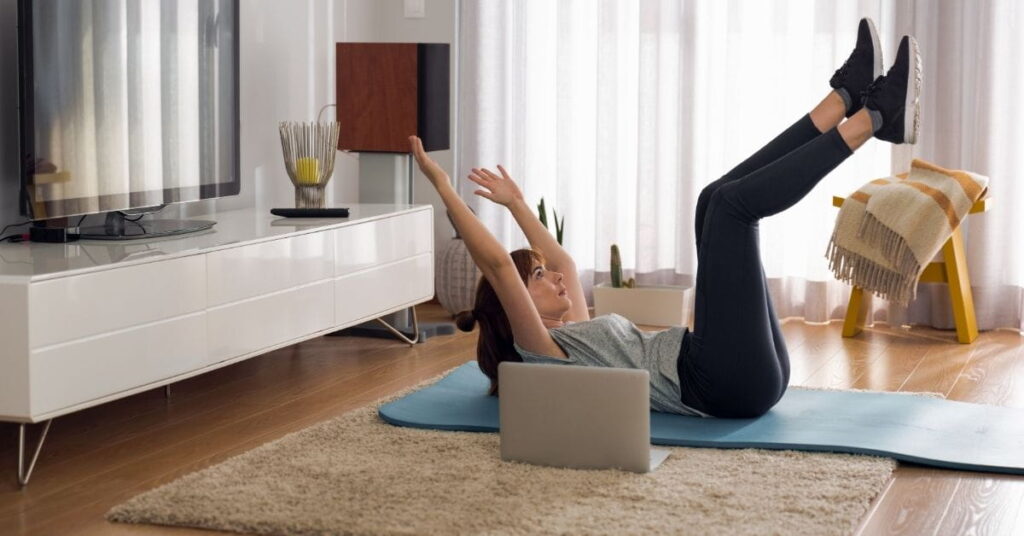

Are you looking for an effective way to strengthen your core without putting stress on your back or joints? Pilates ab workouts focus on controlled, precise movements that target the entire abdominal area, from upper and lower abs to obliques and deep stabilizing muscles.
With just a mat and your body weight, you can tone, tighten, and build endurance while improving posture and balance. These exercises are perfect for beginners and experienced fitness enthusiasts alike, as they can be modified for any level.
In just 15–20 minutes a day, consistent practice will help you develop a strong, stable core that supports your entire body. Let’s dive into 15 core-focused Pilates exercises.
1. The Hundreds
The Hundreds is a classic Pilates move adapted for core strengthening, focusing on deep abdominal engagement while also challenging endurance.
By keeping the arms moving in small, controlled pulses, the exercise activates the upper abs and stabilizes the spine. Using precise breathing enhances core connection and encourages full-body coordination in a safe, low-impact way.
How to Do It?
- Lie on your back with knees bent or legs extended at a comfortable angle, and shoulders lifted slightly off the mat.
- Extend your arms toward the ceiling and begin small, controlled pulses up and down.
- Inhale for five counts while pumping the arms, then exhale for five counts.
- Repeat this cycle for 10–15 breaths, maintaining a lifted chest and engaged core throughout.
- Focus on slow, deliberate movements rather than speed, keeping your neck relaxed and spine stable.
How It Helps:
This exercise strengthens the rectus abdominis, deep core muscles, and stabilizers along the spine. It improves endurance, body control, and posture while providing a safe, low-impact way to tone the abdominal region.
2. Reverse Crunch
Reverse crunch targets the lower abs while reducing strain on the lower back. By lifting the hips toward the ceiling, the exercise engages the deep abdominal muscles and hip flexors simultaneously.
Performing this controlled movement regularly helps improve stability and coordination while toning the core in a beginner-friendly way.
How to Do It?
- Lie on your back with knees bent and feet flat on the floor.
- Place your hands by your sides for support.
- Exhale as you lift your hips off the floor, curling them toward your chest.
- Inhale while slowly lowering the hips back down to the mat.
- Repeat 10–12 times, moving deliberately and focusing on keeping the core engaged without using momentum.
- Keep shoulders relaxed and lower back close to the floor throughout.
How It Helps:
This exercise strengthens lower abs, hip flexors, and stabilizing muscles, improving core control and balance. It also helps with posture and makes daily movements like bending and lifting easier and safer.
3. Oblique Side Crunch
Oblique side crunch emphasizes the side abdominal muscles, targeting obliques while improving torso rotation and stability. Controlled side bends help define the waistline and build lateral strength without overloading the spine. It’s an excellent exercise for beginners seeking to tone and stabilize their core safely.
How to Do It?
- Lie on your back with knees bent and feet flat on the floor.
- Extend your right arm overhead and left arm along the side for support.
- Exhale as you twist your torso, reaching the right arm toward the left knee.
- Inhale as you return to the starting position.
- Repeat 8–10 times per side, keeping movements controlled and deliberate.
- Focus on lifting with the abs rather than pulling with your neck or shoulders.
How It Helps:
This move strengthens the obliques, deep core muscles, and spinal stabilizers. It enhances rotational control, posture, and functional movements like twisting and reaching while contributing to a more toned midsection.
4. Double Leg Stretch
Double leg stretch engages both upper and lower abs simultaneously while maintaining spinal alignment. The slow, controlled extension of arms and legs strengthens the core and hip flexors, developing endurance and stability. Beginners can adjust the range of motion to match their flexibility and strength level.
How to Do It?
- Lie on your back with knees drawn into your chest and shoulders lifted off the mat.
- Extend both arms overhead and legs out at a 45-degree angle while exhaling.
- Inhale as you circle the arms around and bring the knees back into the chest.
- Repeat for 10–12 repetitions, keeping movements slow, smooth, and controlled.
- Focus on maintaining engagement in the abs and avoid arching the lower back.
How It Helps:
This exercise strengthens the rectus abdominis, hip flexors, and stabilizing core muscles. It improves flexibility, coordination, and endurance while supporting better posture and control in everyday movements.
5. Crisscross
Crisscross is a twisting Pilates ab move that targets obliques while engaging the full core. Alternating elbow-to-knee movement develops rotational strength and coordination, improving both muscle tone and spinal stability. It’s effective for shaping the waistline without straining the neck or back.
How to Do It?
- Lie on your back with knees bent and lifted to tabletop position, shoulders lifted off the floor.
- Place your hands behind your head, keeping your elbows wide.
- Exhale as you twist your torso, bringing the right elbow toward the left knee while extending the right leg.
- Inhale as you return to center and repeat on the opposite side.
- Perform 8–10 repetitions per side, focusing on controlled rotation and maintaining a stable core.
- Keep your neck relaxed and avoid pulling on the head.
How It Helps:
This exercise strengthens obliques, rectus abdominis, and deep core muscles. It improves rotational control, coordination, and posture while toning the waistline and supporting spinal stability.
6. Roll Up
The Roll Up is a foundational Pilates exercise that strengthens the entire abdominal wall while improving spinal mobility. By slowly curling the spine off the mat and reaching forward, it develops deep core engagement, flexibility, and control. This slow, deliberate movement is ideal for beginners learning to coordinate breath with movement.
How to Do It?
- Lie flat on your back with legs extended and arms reaching overhead.
- Inhale, then exhale as you slowly curl your torso up, reaching your arms toward your toes.
- Continue rolling up one vertebra at a time until you reach a seated position.
- Inhale at the top, then exhale as you roll back down slowly, stacking the spine one vertebra at a time.
- Repeat 8–10 times, focusing on controlled movements and engaging your core throughout.
- Avoid using momentum; let the abs do the work.
How It Helps:
This exercise strengthens upper and lower abdominals, stretches the spine, and improves posture. It also enhances core control, coordination, and flexibility, making daily bending and reaching movements safer and easier.
7. Leg Circles
Leg Circles target lower abs, hip flexors, and deep stabilizing muscles while promoting hip mobility. By maintaining a stable torso as the legs move in circular patterns, this exercise challenges the core without stressing the back. It can be modified for beginners by reducing the circle size.
How to Do It?
- Lie on your back with one leg extended toward the ceiling and the other flat on the mat.
- Engage your core and keep the lower back pressed lightly into the floor.
- Slowly circle the lifted leg outward, downward, inward, and back up to start.
- Perform 5–8 circles in one direction, then reverse for the same number of repetitions.
- Repeat with the opposite leg, keeping movements slow and controlled.
- Focus on maintaining spinal stability and avoiding arching the lower back.
How It Helps:
This exercise strengthens the lower abs, hip flexors, and stabilizing muscles. It also improves hip mobility, control, and coordination while enhancing overall core strength and balance.
8. Scissor Kicks
Scissor Kicks are a dynamic Pilates move that targets lower abs and hip flexors while improving endurance and coordination. Alternating legs in a controlled, pulsing motion engages the core deeply and helps build strength without relying on momentum.
How to Do It?
- Lie on your back with legs extended toward the ceiling and arms by your sides.
- Lift your head, neck, and shoulders slightly off the mat, engaging your core.
- Lower one leg toward the floor while keeping the other lifted, then switch legs in a controlled, scissor-like motion.
- Repeat for 10–12 repetitions per side, focusing on smooth, deliberate movements.
- Keep your lower back lightly pressed into the mat and avoid straining your neck.
- Breathe steadily, coordinating movement with inhalations and exhalations.
How It Helps:
This exercise strengthens lower abs, hip flexors, and deep core stabilizers. It enhances coordination, endurance, and control, supporting a toned midsection and better spinal alignment.
9. Cradle (New)
The Cradle is a Pilates ab exercise that focuses on both obliques and upper abs while promoting balance and spinal flexibility. By gently rocking side to side in a seated position, it engages the core fully without requiring floor crunches, making it beginner-friendly.
How to Do It?
- Sit on your mat with knees bent and feet lifted off the floor, holding shins with your hands.
- Lean back slightly to engage the core, keeping the spine long.
- Exhale as you twist your torso to the right, then inhale as you roll back to center.
- Exhale as you twist to the left, maintaining control.
- Repeat 8–10 repetitions per side, keeping movements deliberate and steady.
- Focus on using your abdominal muscles to control the motion rather than momentum.
How It Helps:
This exercise strengthens obliques, rectus abdominis, and spinal stabilizers. It improves balance, coordination, and core endurance while supporting a strong, stable midsection for functional movements.
10. Teaser
The Teaser is a challenging Pilates move that combines balance, flexibility, and core engagement. By lifting into a V-shaped position, the exercise strengthens the abs, hip flexors, and spine stabilizers while improving control and precision. Beginners can modify by keeping their knees bent.
How to Do It?
- Lie on your back with knees bent and feet flat on the floor.
- Inhale and lift your head, shoulders, and torso off the mat while extending your arms forward.
- Exhale as you lift your legs to create a V-shape with your body.
- Hold for 2–3 seconds, keeping your core tight, then slowly lower back down with control.
- Repeat 6–8 times, focusing on smooth, deliberate movements.
- Keep your lower back pressed lightly into the floor and avoid straining the neck.
How It Helps:
This exercise strengthens the entire abdominal wall, hip flexors, and stabilizing muscles. It improves balance, control, and spinal flexibility, helping build a strong, toned, and coordinated core.
11. Single Leg Stretch
The Single Leg Stretch targets both the upper and lower abs while engaging deep core stabilizers. This controlled movement improves coordination and endurance while supporting spinal alignment, making it ideal for beginners who want a safe yet effective core workout.
How to Do It?
- Lie on your back with knees pulled toward the chest and shoulders lifted off the mat.
- Place your hands on your shins for support, keeping your spine long.
- Exhale as you extend your right leg out at a 45-degree angle while holding the left knee.
- Inhale as you switch legs, bringing the right knee in and extending the left leg.
- Repeat 10–12 times per side, moving deliberately and keeping the abdominals engaged throughout.
- Avoid arching the lower back and keep your neck relaxed.
How It Helps:
This exercise strengthens the rectus abdominis, obliques, and hip flexors. It improves coordination, endurance, and control while supporting a toned, balanced core and enhancing posture.
12. Double Leg Stretch
Double Leg Stretch challenges both the upper and lower abdominal muscles while promoting spinal stability. By extending both arms and legs simultaneously, the exercise strengthens core control and coordination. Beginners can adjust the range of motion for comfort and safety.
How to Do It?
- Lie on your back with knees drawn to the chest and shoulders lifted.
- Inhale as you extend both arms overhead and legs straight out at a 45-degree angle.
- Exhale as you circle your arms around and draw your knees back in.
- Repeat 10–12 times with slow, controlled movements.
- Keep the core engaged and avoid arching the lower back.
- Focus on smooth, deliberate motions rather than speed, maintaining spinal alignment.
How It Helps:
This exercise strengthens deep core stabilizers, hip flexors, and upper and lower abs. It improves control, posture, and coordination while promoting a stronger, more stable midsection.
13. Crisscross
Crisscross emphasizes obliques while working the entire core. Alternating elbow-to-knee movements engage rotational strength and coordination, creating a balanced workout for the waistline. This exercise is low-impact yet highly effective for toning and defining the abdominal muscles.
How to Do It?
- Lie on your back with knees lifted to the tabletop and hands behind your head.
- Exhale as you twist your torso, bringing the right elbow toward the left knee while extending the right leg.
- Inhale and return to the center, then repeat on the opposite side.
- Perform 8–10 repetitions per side, moving slowly and controlled.
- Keep shoulders relaxed, core engaged, and avoid pulling on the neck.
- Focus on the twist originating from the abdominals, not the upper body.
How It Helps:
This exercise strengthens obliques, deep core stabilizers, and rectus abdominis. It improves rotational control, coordination, and overall core tone while supporting better posture and spinal alignment.
14. Pilates Saw
The Pilates Saw engages obliques, lower abs, and spine stabilizers while improving flexibility and rotational control. This seated twisting movement promotes balance and coordination while targeting the sides of the waist in a safe, beginner-friendly way.
How to Do It?
- Sit with legs extended slightly wider than hip-width apart and arms stretched to the sides.
- Inhale to lengthen your spine, then exhale as you twist your torso to the right, reaching your left hand toward the little toe of your right foot.
- Inhale to return to thecenter, then exhale to the left side.
- Repeat 6–8 times per side with controlled, deliberate movements.
- Keep shoulders relaxed and avoid rounding the spine excessively.
- Focus on twisting from the waist while keeping your core engaged.
How It Helps:
This exercise strengthens obliques, rectus abdominis, and spinal stabilizers. It improves rotational flexibility, balance, and core control while helping tone the waistline and support better posture.
15. Roll Over
Roll Over targets lower and upper abs while stretching the spine and improving core strength. By lifting the legs overhead and rolling back slightly, the exercise develops deep abdominal engagement, coordination, and control. Beginners can bend their knees for a modified version.
How to Do It?
- Lie on your back with legs extended toward the ceiling.
- Inhale, then exhale as you lift the hips off the mat, rolling your legs over your head toward the floor behind you.
- Inhale as you slowly return your legs to a vertical position.
- Repeat 6–8 times, moving slowly and controlled.
- Keep shoulders grounded and spine long while maintaining abdominal engagement.
- Modify by keeping knees bent if full extension feels uncomfortable.
How It Helps:
This exercise strengthens lower and upper abs, hip flexors, and spinal stabilizers. It improves core coordination, flexibility, and control, promoting a strong, balanced midsection and enhancing overall posture.
Conclusion
Consistent practice of these 15 Pilates ab workouts will strengthen your entire core while improving posture, balance, and flexibility. By performing these exercises regularly, you’ll develop a toned midsection, better spinal support, and enhanced functional strength. Start small, focus on control, and watch your core transform over time.