

Have you ever noticed how often back pain or poor posture interferes with your daily routine? A strong back is essential for maintaining balance, preventing injuries, and supporting almost every movement you perform, from lifting groceries to sitting at a desk.
The good news is that you do not need heavy gym machines to build a powerful back. With just a pair of dumbbells and proper technique, you can train your upper, middle, and lower back effectively at home.
Dumbbell exercises allow controlled movements, balanced muscle development, and improved coordination. Here are 15 back workouts with dumbbells that you can easily perform at home to build strength, improve posture, and develop a well-supported upper body.
1. Bent-Over Dumbbell Rows
Bent-over dumbbell rows are a foundational back exercise that targets the latissimus dorsi, rhomboids, and rear deltoids. This movement helps build thickness in the middle back while also strengthening the lower back muscles for better posture.
Since it requires controlled pulling against resistance, it improves coordination and stability. Performing this exercise regularly helps create a strong pulling pattern, which is important for daily tasks and overall upper-body strength development.
How to Do It?
- Stand with your feet shoulder-width apart while holding a dumbbell in each hand and keeping your knees slightly bent.
- Hinge forward at your hips while keeping your back straight and your chest slightly lifted.
- Let the dumbbells hang down with your arms fully extended toward the floor.
- Pull both dumbbells toward your torso by bending your elbows and squeezing your shoulder blades together.
- Keep your elbows close to your body as you lift the weights.
- Pause briefly at the top to fully contract your back muscles.
- Slowly lower the dumbbells back to the starting position in a controlled motion.
- Repeat for the desired number of repetitions while maintaining steady breathing.
How It Helps:
Bent-over dumbbell rows strengthen the middle back, improve posture, and support better shoulder stability. They help reduce strain from prolonged sitting and build functional strength for pulling movements.
2. Single-Arm Dumbbell Row
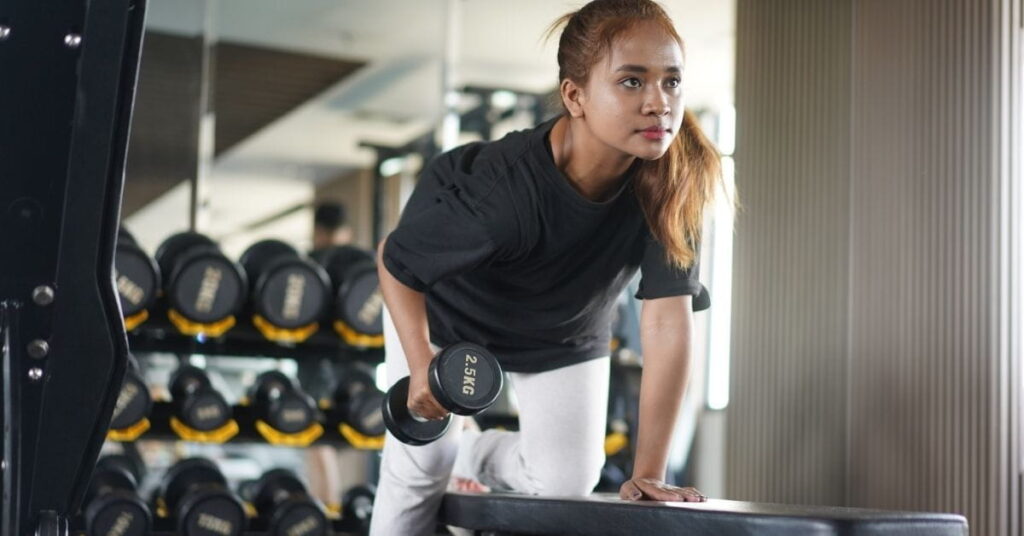
Single-arm dumbbell rows focus on one side at a time, allowing you to correct muscle imbalances and increase muscle activation. This exercise primarily works the lats and rhomboids while engaging the core for stability.
By isolating one side, you can concentrate on form and achieve a deeper contraction. It is especially helpful for building balanced back strength and improving overall muscle symmetry.
How to Do It?
- Place one knee and one hand on a bench or sturdy surface for support while holding a dumbbell in your free hand.
- Keep your back flat and your head aligned with your spine.
- Let the dumbbell hang straight down from your shoulder.
- Pull the dumbbell upward toward your waist by bending your elbow and squeezing your back muscles.
- Keep your elbow close to your torso during the lift.
- Pause briefly at the top of the movement.
- Slowly lower the dumbbell back to the starting position.
- Complete all repetitions on one side before switching.
How It Helps:
Single-arm dumbbell rows build balanced back strength, improve muscle coordination, and strengthen the core. They are effective for correcting uneven muscle development.
3. Dumbbell Deadlifts
Dumbbell deadlifts target the lower back, glutes, and hamstrings while also engaging the upper back for stability. This compound movement strengthens the entire posterior chain and improves lifting mechanics.
It supports better posture and reduces lower back strain when performed correctly. Dumbbell deadlifts are practical for home workouts because they require minimal space and equipment.
How to Do It?
- Stand upright with your feet hip-width apart while holding a dumbbell in each hand in front of your thighs.
- Keep your back straight and your shoulders pulled slightly back.
- Hinge at your hips and lower the dumbbells toward the floor while keeping them close to your legs.
- Maintain a slight bend in your knees as you lower the weights.
- Lower until you feel a stretch in your hamstrings without rounding your back.
- Push through your heels to return to the standing position.
- Squeeze your glutes and back muscles at the top.
- Repeat while maintaining controlled form.
How It Helps:
Dumbbell deadlifts strengthen the lower back and improve posture. They build total posterior chain strength and support safe lifting in daily activities.
4. Reverse Dumbbell Fly
Reverse dumbbell fly exercises target the rear deltoids and upper back muscles, helping improve shoulder alignment and posture. This movement is ideal for counteracting the effects of long hours spent sitting or using electronic devices.
It strengthens smaller stabilizing muscles that support healthy shoulder movement. Regular practice helps develop better upper-back endurance and muscle definition.
How to Do It?
- Stand with your feet shoulder-width apart while holding dumbbells in both hands.
- Hinge forward at your hips while keeping your back flat and knees slightly bent.
- Let your arms hang straight down with palms facing each other.
- Lift both arms outward to the sides until they are level with your shoulders.
- Keep a slight bend in your elbows during the movement.
- Squeeze your shoulder blades together at the top.
- Slowly lower the dumbbells back to the starting position.
- Repeat with controlled motion and steady breathing.
How It Helps:
Reverse dumbbell fly exercises strengthen the upper back and improve posture. They help reduce shoulder discomfort and support better stability during upper-body movements.
5. Renegade Rows
Renegade rows combine a plank position with a rowing movement, targeting the back, shoulders, and core simultaneously. This exercise builds upper-body strength while challenging stability and coordination.
It increases muscle engagement because your body must resist rotation as you lift the weight. Renegade rows are effective for strengthening multiple muscle groups at once.
How to Do It?
- Start in a plank position with a dumbbell in each hand placed directly under your shoulders.
- Keep your body in a straight line from head to heels.
- Spread your feet slightly wider than shoulder-width for better balance.
- Pull one dumbbell toward your rib cage while keeping your hips stable.
- Lower the weight slowly back to the floor.
- Repeat the movement with the opposite arm.
- Continue alternating sides while maintaining a tight core.
- Avoid rotating your torso during the movement.
How It Helps:
Renegade rows strengthen the back and core together. They improve stability, coordination, and overall upper-body strength.
6. Dumbbell Pullovers
Dumbbell pullovers are a versatile movement that targets the lats, chest, and upper back while also engaging the core for stability. This exercise improves shoulder mobility and builds width in the upper back when performed with control.
It creates a deep stretch across the lats, which supports better muscle activation during pulling movements. Dumbbell pullovers are especially useful for individuals training at home with limited equipment.
How to Do It?
- Lie flat on a bench or on the floor while holding one dumbbell with both hands above your chest.
- Keep your arms slightly bent and your feet firmly planted on the ground.
- Slowly lower the dumbbell backward over your head in a controlled arc.
- Continue lowering until you feel a comfortable stretch across your upper back and lats.
- Keep your core tight and avoid arching your lower back excessively.
- Pull the dumbbell back to the starting position using your back muscles.
- Pause briefly above your chest before repeating the movement.
- Maintain steady breathing throughout the set.
How It Helps:
Dumbbell pullovers strengthen the lats and improve shoulder mobility. They support better posture and contribute to a wider, stronger upper back.
7. Dumbbell Shrugs
Dumbbell shrugs primarily target the trapezius muscles located in the upper back and neck area. Strong traps help support shoulder movement and maintain upright posture.
This exercise is simple but highly effective when performed with proper form and controlled motion. It can be easily added to any home workout routine to build upper-back strength and muscle definition.
How to Do It?
- Stand upright with your feet shoulder-width apart while holding a dumbbell in each hand at your sides.
- Keep your arms straight and your shoulders relaxed in the starting position.
- Lift your shoulders straight upward toward your ears without bending your elbows.
- Focus on squeezing your trapezius muscles at the top of the movement.
- Hold the contraction briefly for better muscle engagement.
- Slowly lower your shoulders back to the starting position.
- Avoid rolling your shoulders during the movement.
- Repeat for the recommended repetitions with controlled form.
How It Helps:
Dumbbell shrugs strengthen the trapezius muscles, support better posture, and reduce upper-back tension. They improve shoulder stability and overall upper-body strength.
8. Dumbbell Romanian Deadlift
Dumbbell Romanian deadlifts focus on the lower back, glutes, and hamstrings while engaging the upper back for stability.
This variation emphasizes controlled hip movement and proper posture. It helps strengthen the posterior chain and supports safe lifting mechanics. Practicing this exercise regularly improves lower-back endurance and reduces the risk of strain during daily activities.
How to Do It?
- Stand with your feet hip-width apart while holding a dumbbell in each hand in front of your thighs.
- Keep your knees slightly bent and your back straight throughout the movement.
- Hinge at your hips and slowly lower the dumbbells along the front of your legs.
- Lower until you feel tension in your hamstrings while maintaining a neutral spine.
- Keep the dumbbells close to your body during the descent.
- Push through your heels to return to a standing position.
- Squeeze your glutes and lower back muscles at the top.
- Repeat with steady and controlled movement.
How It Helps:
This exercise strengthens the lower back and improves hip flexibility. It supports better posture and increases overall posterior chain strength.
9. Incline Dumbbell Rows
Incline dumbbell rows reduce strain on the lower back while targeting the middle back and lats. By lying face down on an incline bench, you isolate the upper back muscles and maintain proper posture throughout the movement.
This setup helps improve muscle engagement without requiring heavy weights. It is suitable for beginners and experienced individuals alike.
How to Do It?
- Adjust a bench to a moderate incline and lie face down while holding a dumbbell in each hand.
- Let your arms hang straight down toward the floor.
- Keep your chest pressed against the bench for support.
- Pull both dumbbells upward toward your torso by bending your elbows.
- Squeeze your shoulder blades together at the top.
- Pause briefly to increase muscle contraction.
- Lower the weights back down slowly.
- Repeat while maintaining steady breathing.
How It Helps:
Incline dumbbell rows isolate the middle back, improve posture, and reduce lower-back strain. They promote balanced muscle development and controlled strength gains.
10. Dumbbell Superman
Dumbbell Superman is a lower-back strengthening exercise that improves spinal support and stability. It combines a classic floor extension with light dumbbell resistance to increase muscle engagement.
This movement is ideal for individuals looking to build lower-back endurance and reduce discomfort caused by prolonged sitting.
How to Do It?
- Lie face down on the floor while holding light dumbbells in each hand.
- Extend your arms forward and keep your legs straight behind you.
- Engage your core and slowly lift your arms, chest, and legs off the floor simultaneously.
- Keep your neck neutral and avoid straining.
- Hold the raised position briefly while tightening your lower back muscles.
- Lower your body back to the floor slowly and with control.
- Rest briefly before repeating the movement.
- Perform the desired number of repetitions.
How It Helps:
Dumbbell Superman strengthens the lower back, improves spinal stability, and supports better posture. It builds endurance in muscles responsible for maintaining upright alignment.
11. Dumbbell Rear Delt Rows
Dumbbell rear delt rows focus on the upper back and rear shoulder muscles, helping improve posture and shoulder alignment. This exercise is performed with elbows flared outward, which shifts emphasis to the rear deltoids and upper traps rather than the lats.
It is particularly useful for balancing pressing movements and strengthening smaller stabilizing muscles that support healthy shoulder function during daily tasks and workouts.
How to Do It?
- Stand with your feet shoulder-width apart while holding a dumbbell in each hand.
- Hinge forward at your hips with a flat back and slightly bent knees.
- Let your arms hang straight down with palms facing each other.
- Pull the dumbbells upward while keeping your elbows flared out to the sides.
- Squeeze your shoulder blades together at the top of the movement.
- Pause briefly to maximize muscle engagement.
- Lower the weights slowly back to the starting position.
- Maintain controlled breathing and steady form throughout the set.
How It Helps:
Dumbbell rear delt rows strengthen the upper back, improve shoulder stability, and reduce muscle imbalances caused by excessive forward posture. They support better alignment and balanced upper-body development.
12. Dumbbell Good Mornings
Dumbbell good mornings primarily target the lower back, hamstrings, and glutes while requiring upper-back stability to maintain proper posture. This movement strengthens the posterior chain and improves hip hinge mechanics.
It is highly effective for building lower-back endurance and supporting safe lifting patterns during everyday activities.
How to Do It?
- Stand upright with your feet hip-width apart while holding a single dumbbell close to your chest with both hands.
- Keep your knees slightly bent and your back straight.
- Hinge at your hips and lower your torso forward slowly while maintaining a neutral spine.
- Lower until your torso is nearly parallel to the floor without rounding your back.
- Keep your core engaged and your shoulders pulled slightly back.
- Push through your heels to return to the starting position.
- Squeeze your glutes at the top of the movement.
- Repeat for the recommended repetitions.
How It Helps:
Dumbbell good mornings strengthen the lower back and improve hip mobility. They support better posture and build endurance in muscles responsible for spinal support.
13. Dumbbell Reverse Grip Rows
Dumbbell reverse grip rows shift emphasis slightly toward the lower lats and biceps by using an underhand grip. This variation promotes different muscle activation compared to standard rows.
It supports balanced back development and improves pulling strength. Adding this variation helps target the lats more directly while maintaining strong upper-back engagement.
How to Do It?
- Stand with your feet shoulder-width apart while holding dumbbells with palms facing forward.
- Bend your knees slightly and hinge forward at the hips with a straight back.
- Let the dumbbells hang down toward the floor.
- Pull the weights upward toward your lower rib cage while keeping your elbows close to your body.
- Focus on squeezing your lats at the top of the movement.
- Pause briefly to strengthen the contraction.
- Slowly lower the dumbbells back down.
- Maintain proper form throughout each repetition.
How It Helps:
Reverse grip rows strengthen the lower lats and improve pulling power. They contribute to better muscle balance and support overall back strength.
14. Dumbbell Y Raises
Dumbbell Y raises target the upper back and shoulder stabilizers by lifting the arms in a Y-shaped motion. This movement improves shoulder mobility and strengthens muscles that support healthy posture.
It is a light-resistance exercise that focuses on control and alignment rather than heavy lifting, making it suitable for all fitness levels.
How to Do It?
- Lie face down on an incline bench or stand hinged forward while holding light dumbbells.
- Let your arms hang straight down toward the floor.
- Lift your arms upward and slightly forward to form a Y shape with your body.
- Keep your thumbs pointing upward during the lift.
- Raise your arms until they are aligned with your shoulders.
- Hold briefly at the top while squeezing your upper back muscles.
- Lower the dumbbells slowly back to the starting position.
- Repeat with controlled motion and steady breathing.
How It Helps:
Dumbbell Y raises strengthen shoulder stabilizers and improve upper-back endurance. They promote better posture and reduce strain on the neck and shoulders.
15. Dumbbell Bird Dog Rows
Dumbbell bird dog rows combine balance training with back strengthening by engaging the core and stabilizing muscles. This exercise improves coordination while targeting the lats and lower back. It challenges your body to maintain alignment during movement, making it effective for functional strength development.
How to Do It?
- Begin on all fours with a dumbbell placed near one hand.
- Keep your back flat and your core engaged.
- Extend one leg straight behind you while gripping the dumbbell with the opposite hand.
- Pull the dumbbell toward your torso while maintaining balance.
- Avoid rotating your hips during the movement.
- Lower the dumbbell back to the floor slowly.
- Return your leg to the starting position.
- Switch sides after completing the repetitions.
How It Helps:
Dumbbell bird dog rows strengthen the back and core simultaneously. They improve balance, coordination, and spinal stability for better overall functional movement.
Conclusion
Training your back at home with dumbbells is both practical and effective. These 15 exercises target every major back muscle, improve posture, and build balanced strength. With consistent practice and proper form, you can develop a stronger, healthier back without stepping into a gym.