
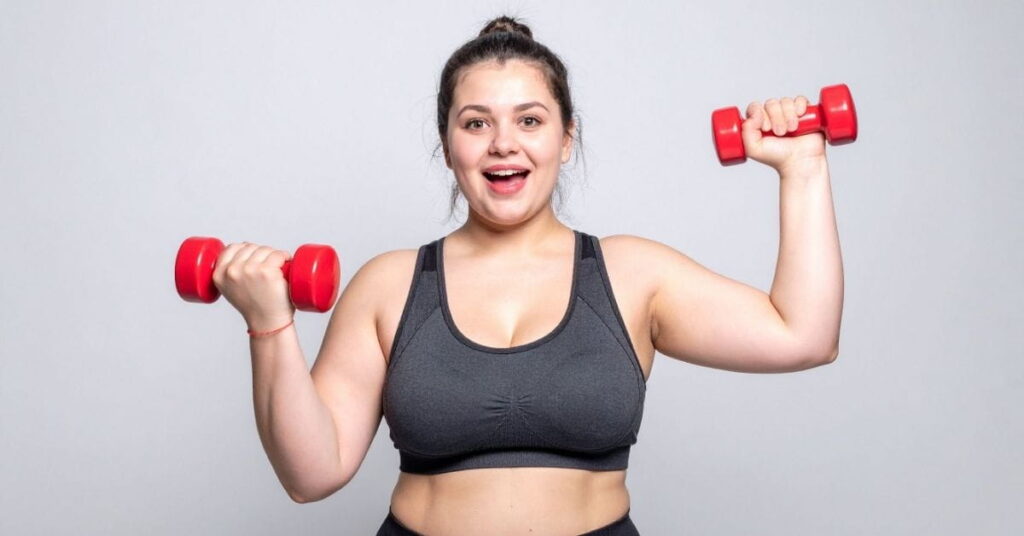

Want stronger, more defined arms that instantly stand out in sleeveless outfits? Training your shoulders with dumbbells is one of the most effective ways to build upper-body strength while shaping your arms at the same time.
Well-developed deltoids create width, improve posture, and support nearly every pushing and pulling movement you perform. The best part is that you only need a pair of dumbbells to create a challenging and dynamic workout.
By adjusting angles, tempo, and grip positions, you can target all three heads of the shoulder while engaging your triceps and upper back. This list of shoulder dumbbell workouts will help you build strength, stability, and muscular endurance without complicated equipment.
1. Kneeling Single Arm Arnold Press
The kneeling single arm Arnold press challenges shoulder stability while strengthening the deltoids through rotation and controlled pressing. Performing it in a half-kneeling stance activates the core and improves balance, forcing one shoulder to work independently.
The rotation from palms facing inward to forward increases muscle activation throughout the range of motion. This exercise develops shoulder strength, coordination, and control while supporting balanced upper-body development.
How to Do It?
- Begin in a half-kneeling position with one knee on the floor and the opposite foot planted firmly in front while holding a dumbbell in the hand opposite your forward leg.
- Keep your core tight and spine neutral as you bring the dumbbell to shoulder height with your palm facing you.
- Press the weight upward while rotating your palm forward until your arm is fully extended overhead.
- Pause briefly at the top while maintaining balance and steady breathing.
- Slowly lower the dumbbell while rotating your palm back toward you, returning to the starting position with control.
How It Helps
This movement strengthens the shoulders through rotation and pressing while improving balance and core stability.
Training one arm at a time reduces strength imbalances and builds better muscular control. It also supports stronger overhead movements and better posture.
2. 1.5 Rep Lateral Raise
The 1.5 rep lateral raise increases time under tension by adding a half repetition within each full repetition. This technique intensifies side deltoid activation without requiring heavier weights.
The controlled tempo prevents momentum and forces strict form throughout the movement. It is highly effective for building shoulder endurance and improving muscle definition while maintaining joint safety.
How to Do It?
- Stand upright holding dumbbells in front of your thighs with palms facing inward and a slight bend in your elbows.
- Raise the dumbbells out to your sides until they reach shoulder height while keeping your torso stable.
- Lower the weights halfway down with control, maintaining tension in your shoulders.
- Lift them back to shoulder height again before slowly lowering fully to the starting position.
- Repeat while keeping movements smooth and avoiding swinging or shrugging.
How It Helps
This variation increases shoulder endurance and strengthens the side deltoids effectively. The added half repetition intensifies muscle engagement without excessive weight. It supports stronger upper-body control and improved shoulder definition.
3. Upright Row into Front Raise
The upright row into front raise combines two movements to challenge the shoulders from different angles. Pulling the dumbbells upward activates the traps and deltoids, while the front raise isolates the anterior shoulders.
Alternating between these patterns increases muscular endurance and coordination. This combination builds comprehensive shoulder strength and keeps the workout dynamic.
How to Do It?
- Stand tall holding dumbbells in front of your thighs with arms extended and palms facing your body.
- Pull the dumbbells upward toward your chest while leading with your elbows and keeping the weights close to your torso.
- Pause briefly at chin height before lowering the weights back down under control.
- From the starting position, raise the dumbbells straight in front of your body until they are parallel to the floor.
- Lower slowly and alternate between upright rows and front raises for each repetition cycle.
How It Helps
This combination exercise builds shoulder and upper-back strength while improving coordination. It targets multiple muscle groups within one sequence, increasing efficiency. Over time, it contributes to stronger pressing and pulling performance.
4. Underhand Front Raise
The underhand front raise shifts emphasis onto the front deltoids while engaging the biceps slightly due to the grip position. Holding the dumbbells with palms facing forward changes the activation pattern compared to traditional front raises.
Controlled lifting ensures steady muscle tension and reduces strain. This variation builds anterior shoulder strength and improves stability during pressing movements.
How to Do It?
- Stand uprigh,t holding dumbbells in front of your thighs with palms facing forward and arms fully extended.
- Engage your core and lift the weights straight in front of you until your arms reach shoulder height.
- Keep a slight bend in the elbows and avoid leaning backward during the lift.
- Pause briefly at the top while maintaining steady breathing.
- Lower the dumbbells slowly back to the starting position with controlled movement.
How It Helps
The underhand grip increases front shoulder activation and strengthens pressing muscles. It also supports better control during overhead lifts. Consistent practice builds stronger, more stable shoulders.
5. Diamond Front Raise
The diamond front raise keeps the dumbbells close together with bent elbows, forming a diamond shape with the arms. This position maintains constant tension on the anterior deltoids and reduces strain on the joints.
The shortened lever creates focused shoulder activation while maintaining controlled movement. It is ideal for refining shoulder strength and endurance.
How to Do It?
- Hold dumbbells in front of your thighs with palms facing yo,u and elbows bent so the weights meet in the middle.
- Maintain the diamond shape formed by your arms throughout the movement.
- Lift the weights together until they reach shoulder height without straightening your elbows.
- Pause briefly while keeping your core tight and shoulders stable.
- Lower slowly back to the starting position, maintaining tension.
How It Helps
This variation strengthens the front deltoids while maintaining joint-friendly mechanics. It improves muscular endurance and supports better control during pressing exercises. It contributes to stronger, more defined shoulders.
6. Lateral Raise into Front Raise
The lateral raise into front raise combines two classic shoulder movements into one continuous sequence, increasing time under tension and coordination demands. Lifting the dumbbells out to the sides activates the middle deltoids, while rotating and bringing them forward shifts emphasis to the anterior shoulders.
This flowing pattern challenges stability and control without requiring heavy weights. It is effective for building endurance and balanced shoulder development.
How to Do It?
- Stand upright holding dumbbells in front of your thighs with palms facing inward and arms extended.
- Raise the dumbbells out to your sides until they reach shoulder height while keeping a slight bend in your elbows.
- Without lowering fully, rotate your arms so the dumbbells move toward the front of your body at shoulder height.
- Slowly lower the weights back down in front of your thighs with control.
- Reset your palms inward and repeat the full sequence steadily.
How It Helps
This combination strengthens both the side and front deltoids in one repetition cycle. It improves muscular coordination and endurance while supporting stronger overhead and pressing movements over time.
7. Extended Front Raise
The extended front raise begins with dumbbells at your sides and incorporates a rotation as you lift, increasing shoulder engagement through a longer arc of motion.
This variation keeps constant tension on the anterior deltoids while demanding strict posture. The controlled rotation challenges coordination and reduces reliance on momentum. It builds strength steadily without overloading the joints.
How to Do It?
- Stand tall, holding dumbbells at your sides with palms facing each other and arms fully extended.
- Engage your core and lift the weights forward while rotating your palms downward during the ascent.
- Raise until your arms are parallel to the floor, keeping your shoulders stable and neck relaxed.
- Pause briefly at shoulder height while maintaining steady breathing.
- Lower the dumbbells slowly back to your sides, reversing the motion with control.
How It Helps
This movement strengthens the front deltoids and improves shoulder stability. The extended arc increases muscle activation and supports stronger pressing performance while reinforcing proper posture.
8. Seated Dumbbell Shoulder Press
The seated dumbbell shoulder press focuses on strict overhead pressing while minimizing lower-body assistance. Sitting upright reduces momentum and increases direct deltoid activation. This compound movement builds significant shoulder and tricep strength while improving upper-body control. Using dumbbells allows independent arm movement, helping correct strength imbalances between sides.
How to Do It?
- Sit upright on a bench with back support while holding a dumbbell in each hand at shoulder height.
- Keep your core engaged and feet flat on the floor for stability.
- Press the dumbbells overhead until your arms are fully extended without locking your elbows forcefully.
- Pause briefly at the top while maintaining steady breathing and upright posture.
- Lower the weights slowly back to shoulder height under control before repeating.
How It Helps
This exercise builds strong shoulders and triceps while improving overhead strength. It supports better performance in other pressing movements and contributes to balanced upper-arm development.
9. Bent-Over Reverse Fly
The bent-over reverse fly targets the rear deltoids and upper back, which are often neglected in shoulder training. Strengthening these muscles improves posture and shoulder stability.
Maintaining a hinged position increases core activation while isolating the posterior shoulder muscles. Controlled lifting ensures proper engagement without unnecessary strain.
How to Do It?
- Hold a dumbbell in each hand and hinge at the hips with your back flat and knees slightly bent.
- Let your arms hang straight down with palms facing each other.
- Raise the dumbbells out to your sides until they reach shoulder height while squeezing your shoulder blades together.
- Pause briefly at the top without shrugging your shoulders.
- Lower the weights slowly back to the starting position with control.
How It Helps
This movement strengthens the rear shoulders and upper back, improving posture and joint stability. Balanced shoulder development reduces injury risk and supports stronger pressing exercises.
10. Alternating Dumbbell Press
The alternating dumbbell press increases core engagement by pressing one arm at a time while the other remains stable. This variation improves coordination and prevents dominance of one side.
It builds shoulder and tricep strength while challenging stability throughout the torso. Controlled tempo ensures balanced muscle activation.
How to Do It?
- Stand or sit upright, holding dumbbells at shoulder height with palms facing forward.
- Press one dumbbell overhead while keeping the other at shoulder level.
- Pause briefly at full extension without leaning to one side.
- Lower the raised dumbbell slowly back to shoulder height.
- Alternate arms for each repetition while maintaining steady breathing and posture.
How It Helps
Alternating presses strengthen each shoulder independently and improve core stability. They promote muscular balance and increase overall overhead strength for functional movements.
11. Cross-Body Push-Up
The cross-body push-up increases core engagement by adding a controlled reach across the body at the top of each repetition. This variation improves rotational stability and prevents excessive hip movement during pressing.
It builds chest, shoulder, and tricep strength while forcing the obliques to remain active. Slow and deliberate movement ensures proper alignment and balanced muscle activation throughout the exercise.
How to Do It?
- Begin in a standard push-up position with hands slightly wider than shoulder-width apart.
- Lower your chest toward the floor while keeping your hips square and stable.
- Press upward and lift one hand to tap the opposite shoulder or reach across your torso.
- Place the hand back under your shoulder with control.
- Alternate sides with each repetition while maintaining steady breathing and tight core engagement.
How It Helps
Cross-body push-ups strengthen the upper body while improving balance and rotational control. They train the core to resist twisting and promote greater coordination during pressing movements.
12. Clap Push-Up
The clap push-up develops explosive upper-body strength by requiring rapid force production from the chest and triceps. This variation improves power output and reaction time through dynamic movement.
It builds fast-twitch muscle fibers while reinforcing proper push-up mechanics. Controlled landings ensure joint safety and consistent muscle activation throughout each repetition.
How to Do It?
- Start in a strong push-up position with hands placed under your shoulders.
- Lower your body toward the floor with controlled elbow movement.
- Press forcefully through your palms to lift both hands off the ground.
- Clap quickly while airborne and prepare for landing.
- Land softly with bent elbows and immediately move into the next repetition.
How It Helps
Clap push-ups increase explosive strength and athletic performance. They improve upper-body power and coordination while reinforcing controlled movement patterns.
Conclusion
Push-ups and dumbbell shoulder exercises remain highly effective for building upper-body strength when performed with variety and intention. By incorporating these movements into your routine, you can target different muscle groups, improve stability, and develop power without complicated equipment. Consistency, proper form, and gradual progression will deliver lasting results.